


When you start looking into the prices for nannies, it can feel overwhelming. Families in the UK typically pay between £14 and £18 gross per hour outside of London. In the capital, however, those rates often climb to £18 to £25+ gross per hour. This figure isn’t just a number; it’s a reflection of a nanny’s experience, their qualifications, and the unique demands of your family’s role. Understanding these costs is the first step toward finding exceptional care for your children and peace of mind for yourself.
Getting to Grips with UK Nanny Salaries
Figuring out the cost of hiring a nanny is the first, and arguably most important, step in finding fantastic care for your children. It’s much more than just a salary – you’re investing in your family’s peace of mind and your child’s growth. The world of professional nannying has changed a lot; today’s nannies are recognised as highly skilled professionals, and their pay reflects that expertise.
Several key things shape what a nanny earns here in the UK. Location is a huge one. There’s a clear premium for nannies in major cities, especially London, where the demand for top-tier childcare is relentless.
This guide will break down the typical prices for nannies to give you a solid financial starting point for your budget. We’ll explore:
- How where you live affects hourly rates and annual salaries.
- The financial difference between a live-in and a live-out nanny.
- The way experience and specialist qualifications influence what a nanny expects to be paid.
- The additional “hidden” costs of being an employer.
A Snapshot of Regional Pay Differences
In the fast-paced world of London, where families are often juggling demanding careers, nanny salaries have hit new highs. A recent report showed the average hitting a record £50,000 gross per year – a massive 9.7% increase from the year before. This jump, which works out to about £19.51 per hour for a full-time live-out role, is well ahead of the national average wage growth. It really highlights the value placed on skilled childcare in the capital.
This infographic gives you a quick visual comparison of salaries in London versus the rest of the UK, covering both live-in and live-out positions.
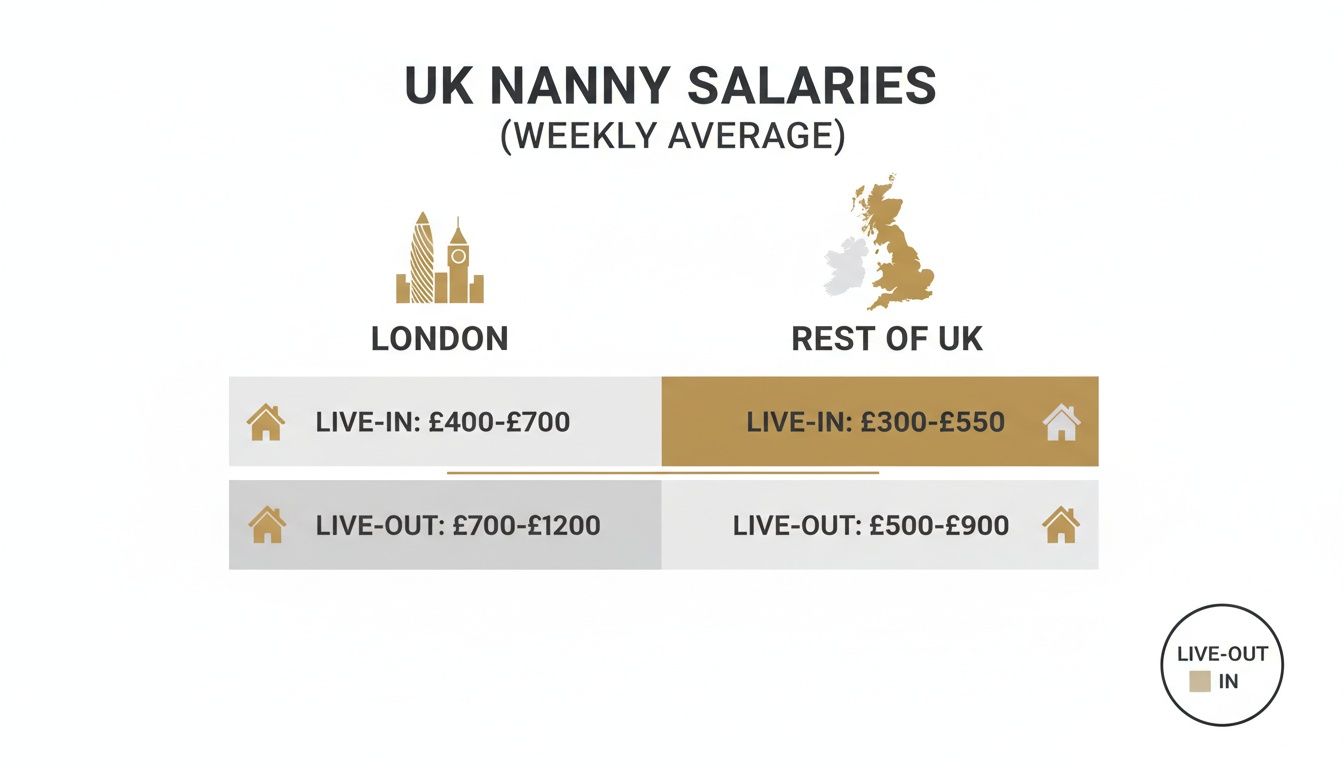
As you can see, London salaries carry a significant premium for both live-in and live-out roles, which is a vital piece of the puzzle when you’re planning your budget. For a deeper dive into these numbers, take a look at our full guide on how much nannies make.
UK Nanny Salary Benchmarks at a Glance
To make things even clearer, here’s a table summarising the average gross annual salaries you can expect for full-time nannies in key regions across the UK.
| Region | Live-Out Average Annual Salary | Live-In Average Annual Salary |
|---|---|---|
| London | £45,000 – £65,000+ | £38,000 – £55,000+ |
| Home Counties | £38,000 – £50,000 | £32,000 – £45,000 |
| Rest of UK | £32,000 – £45,000 | £28,000 – £40,000 |
These figures provide a solid baseline, but remember that specific duties, hours, and a nanny’s individual experience will all influence the final salary. By understanding these foundational benchmarks, you’re in a much stronger position to create a competitive offer that attracts the high-calibre childcare professional your family deserves.
What Really Goes into a Nanny’s Salary?
Figuring out the right salary for a nanny is never a one-size-fits-all calculation. It’s more like putting together a puzzle, where each piece—from your location to the nanny’s experience—has to fit perfectly. The final prices for nannies are a unique blend of factors that reflect the candidate’s value and your family’s specific needs.
Getting a handle on these variables is the first step to setting a realistic budget. It also helps you put together a competitive compensation package that will attract the kind of high-calibre professional you want for your children. When you understand what shapes the numbers, you can see beyond a simple hourly rate and appreciate the true value you’re investing in.
Location, Location, Location… and Lifestyle
It’s no surprise that where you live is one of the biggest factors driving nanny salaries. Just as the cost of a house varies wildly from the city to the countryside, so does the cost of childcare. A nanny based in Knightsbridge, for instance, will naturally command a far higher salary than one in a quieter part of the UK, simply because the cost of living and demand for top-tier professionals are so much greater.
Beyond the postcode, the nature of the role itself is a huge piece of the puzzle:
- Live-In Nannies typically have a lower gross salary, but this is balanced by the fact that their accommodation, and often meals and bills, are covered as part of the package.
- Live-Out Nannies receive a higher gross wage to account for their own rent or mortgage, utilities, and daily commute.
- Rota Nannies, working demanding schedules like ‘one week on, one week off’, earn a premium. Their salary reflects the intense, 24/7 nature of their work when they are on duty.
Experience and Qualifications: The Real Difference Makers
A nanny’s background and training are where you really see the value come through. A candidate with 10+ years of experience and impeccable, long-term references will justifiably earn more than someone at the start of their career. It’s not just about the years they’ve put in; it’s about the proven track record, the refined problem-solving skills, and the deep, intuitive understanding of children they’ve built over time.
Formal qualifications also carry significant weight. When a nanny has invested in top-tier training, their salary reflects that expertise.
Look out for these key qualifications:
- Norland College: The absolute pinnacle of nanny training, producing some of the world’s most sought-after childcare professionals.
- CACHE Qualifications: Widely recognised as the gold standard for childcare qualifications in the UK.
- Paediatric First Aid: This is a non-negotiable. It’s a fundamental sign of a nanny’s commitment to your child’s safety.
- Specialist Training: Degrees in early years education or certificates in areas like special educational needs (SEN) will always command a higher salary.
Remember, when you invest in a highly qualified and experienced nanny, you’re not just hiring a caregiver. You are bringing in a professional partner dedicated to nurturing your child’s growth, safety, and well-being.
The Scope of the Role
Finally, the job description you write will have a direct impact on the salary. A role looking after three children, especially if they include twins or a baby, is far more demanding than caring for one school-aged child. That increased workload needs to be reflected in the pay. It’s also worth noting how national pay benchmarks, like the latest minimum wage changes, can provide a baseline for understanding compensation.
Think about how these extra responsibilities add layers to the role and the salary:
- Frequent Travel: If a nanny is expected to travel with the family, whether for a weekend in the country or a month abroad, their pay needs to compensate for that flexibility and time away from their own home.
- Expanded Duties: Is the role purely childcare, or does it also involve household management, family cooking, or looking after pets? Any responsibilities beyond the children should be factored into the salary.
- Specialist Skills: A bilingual nanny who can teach your child fluent French or Mandarin is offering a valuable educational skill, and that comes at a premium.
By thinking through each of these elements—location, experience, and the role’s complexity—you’ll get a much clearer picture of the expected prices for nannies and be able to put forward a fair, attractive offer.
Calculating the True Cost of Employing a Nanny
When you agree on a salary with a nanny, that figure is just the starting point. It’s easy to focus on the hourly rate, but to build a professional and lasting relationship, you need to understand the full financial picture. Looking beyond the gross salary helps you budget properly and ensures there are no unwelcome surprises later on.

The moment you hire a nanny, you become an employer in the eyes of the law. This comes with a set of legal responsibilities and “on-costs” – extra expenses that are non-negotiable. Factoring these into your budget from day one is the key to a smooth and compliant employment journey.
Understanding Your Employer Contributions
The main costs you’ll need to cover, on top of your nanny’s gross salary, are for tax and pensions. These are handled through the PAYE (Pay As You Earn) system and are absolutely mandatory.
- Employer’s National Insurance (NI) Contributions: If your nanny earns over a certain amount (the secondary threshold set by HMRC), you’re legally required to pay Class 1 National Insurance. This is calculated as a percentage of their earnings and is a significant part of your on-costs.
- Pension Auto-Enrolment: UK law also dictates that you must enrol any eligible nanny into a workplace pension scheme. You’ll need to contribute a minimum percentage of their qualifying earnings into this pension, and they will contribute a portion from their salary too.
All told, these contributions typically add an extra 10-15% on top of the nanny’s gross annual salary. It’s a crucial number to remember when you’re working out what you can afford.
Essential Insurance and Payroll Management
It doesn’t stop at taxes and pensions. A couple of other elements are vital for protecting yourself and staying on the right side of the law. First up is Employer’s Liability Insurance. This isn’t just a good idea; it’s a legal requirement for anyone employing someone in their home. It provides financial protection if your nanny has an accident or falls ill because of their work for you. You can find a deeper dive into this topic in our guide on insurance for your nanny.
On top of that, there’s the admin of managing payroll, which can be surprisingly complex. Many families find it far easier to hand this over to a specialist nanny payroll service. A dedicated payroll service is a lifesaver. It guarantees that payslips are generated correctly, that all taxes and NI contributions are paid to HMRC on time, and that pension payments are managed without a hitch. It’s an investment in peace of mind, freeing you from the admin headache while ensuring you’re fully compliant.
The Rising Demand for Professional Nannies
It’s also worth remembering that the cost of hiring a nanny is shaped by the wider market. The UK is in the midst of a growing childcare crisis, which has pushed the demand for private nannies—and their salaries—sky-high.
Over the last five years, nanny pay has been on a steady climb. In London, rates recently jumped by 7.64% in a single year, hitting an average of £16.48 gross per hour. That’s an annual pay rise of over £3,000. Outside the capital, the rest of the UK saw an even bigger leap of 11-12%. This surge is fuelled by a shrinking pool of other childcare options—Ofsted reported a loss of 1,440 nurseries and childminders, forcing more families to seek in-home care. The annual Nannytax salary survey is a great resource for exploring these trends in detail.
By getting to grips with every component—from National Insurance and pensions to insurance and market trends—you can confidently prepare a budget that reflects the true prices for nannies and build a solid, professional relationship from the very beginning.
Exploring Prices for Elite and Specialist Nanny Roles
Sometimes, standard childcare just doesn’t cut it. For many families, especially those with unique lifestyle or educational needs, turning to an elite or specialist professional is the answer. The prices for nannies in this top tier are certainly a significant investment, but one that brings exceptional skill, discretion, and tailored expertise right into your home.

We’re talking about a level of care that goes far beyond managing daily routines. It’s about actively shaping a child’s early years with specialised knowledge, whether that’s fluency in a second language or world-renowned training in child psychology. These professionals command premium rates because their qualifications and experience are, simply put, second to none.
Norland Nannies and Governesses
Instantly recognisable by their iconic uniform, Norland Nannies are perhaps the most famous childcare professionals in the world. Their training is legendary, covering everything from developmental psychology and advanced first aid to evasive driving and cybersecurity—skills designed to meet the complex demands of high-profile households.
Unsurprisingly, their salaries sit at the very top of the market. A family looking to hire a Norland graduate can expect to invest £60,000 to over £100,000 annually in London, depending on her experience and the specific duties of the role. If you’re considering this path, our detailed guide explains exactly how much a Norland Nanny costs.
A governess or governor is another high-calibre role, but one with a laser focus on education. These professionals often hold teaching degrees and essentially act as a child’s private educator, managing their curriculum, providing tuition, and preparing them for entry into leading schools. Their pay is on par with that of a Norland Nanny, reflecting their strong academic credentials.
Bilingual and Multilingual Nannies
In our increasingly connected world, giving a child the gift of another language is priceless. A bilingual nanny can immerse a child in a second language from day one, making fluency a completely natural part of their development. It’s a skill highly sought after by international and VIP families for obvious reasons.
This high demand means their salaries command a premium.
- In London: A bilingual nanny typically earns £20 to £30 gross per hour.
- Outside London: Rates usually fall into the £18 to £22 gross per hour range.
It’s an investment that pays huge dividends in a child’s cognitive development and cultural awareness, laying the groundwork for a global perspective that will last a lifetime. The higher rate simply reflects the rarity of finding a candidate who is both an excellent caregiver and a fluent linguist.
Maternity Nurses and Newborn Care Specialists
Those first few weeks with a newborn are precious but utterly exhausting. This is where a maternity nurse or night nanny becomes an absolute godsend. They provide expert care for the baby while giving new parents the support they desperately need to rest and recover. Their primary job is to establish healthy feeding and sleeping routines and offer gentle guidance on all aspects of newborn care.
For high-end households, these specialists are worth their weight in gold. In London, maternity and night nannies can earn £25-£30 gross per hour, which can be up to 50% more than standard live-out rates. For families with twins or triplets, 24-hour care can easily exceed £425 per day. This reflects the critical, round-the-clock nature of their support during such a pivotal time.
Comparative Rates for Specialist Nanny Roles (London)
This table offers a snapshot of the typical gross hourly and annual salary ranges you might encounter when hiring specialist childcare in London.
| Specialist Role | Typical Gross Hourly Rate (£) | Typical Gross Annual Salary (£) |
|---|---|---|
| Bilingual Nanny | £20 – £30 | £52,000 – £78,000 |
| Maternity Nurse | £25 – £30+ | N/A (typically short-term contracts) |
| Governess / Governor | N/A (salaried) | £60,000 – £100,000+ |
| Norland Nanny | N/A (salaried) | £60,000 – £100,000+ |
As you can see, the investment varies significantly based on the niche skills required. Understanding the prices for nannies with these elite qualifications helps you appreciate the incredible value they bring. It’s a strategic investment in your child’s future and your family’s well-being, ensuring you have the highest standard of professional care when you need it most.
Comparing Agency Fees with a Private Hiring Search
When it comes to finding the right nanny, you’re essentially faced with two paths: partnering with a specialist agency or going it alone with a private search. While the DIY route might seem like a way to keep a handle on the prices for nannies, it’s crucial to look beyond the initial agency fee and consider the hidden costs and sheer time commitment of managing the search yourself.
Think of an agency placement fee as a one-off investment in a professional, all-encompassing service. This fee opens the door to an exclusive network of highly qualified candidates who you simply won’t find on public job boards. It’s your ticket to a handpicked selection of the best talent out there.
The Value of an Agency Partnership
Working with a top-tier agency takes the stress and uncertainty out of the hiring process, replacing it with a structured, secure, and managed experience. The placement fee isn’t just for finding a person; it’s for the peace of mind that comes with professional expertise.
Here’s what you’re really paying for:
- Rigorous Vetting: Agencies carry out exhaustive background checks, verify every qualification, and conduct deep-dive interviews. This saves you dozens of hours and ensures only the most credible professionals even make it to your shortlist.
- Expert Matchmaking: A good consultant gets to know the unique dynamics of your household. They don’t just match CVs to job descriptions; they match a nanny’s personality, skills, and experience to your family’s culture.
- Contract Negotiation: You’ll get expert guidance on drawing up a fair and legally robust employment contract, which is vital for protecting both you and your nanny.
- Ongoing Support: The relationship doesn’t just stop once the contract is signed. The best agencies provide post-placement support to help everyone settle in and ensure the relationship thrives long-term.
Our guide on choosing the right domestic staffing agencies offers a closer look at what a premier service entails. At its core, this level of service is all about minimising risk and guaranteeing quality.
The Hidden Costs of a Private Search
A private search can look like the cheaper option at first glance, but the true costs—both in money and time—can mount up surprisingly fast. You’re effectively taking on the role of a full-time recruiter, and it’s a demanding job.
Just think about the tasks you’d be responsible for:
- Advertising: Posting on reputable job sites isn’t free, and you’ll likely be inundated with an overwhelming number of applications.
- Screening: You’ll have to personally sift through potentially hundreds of CVs, the vast majority of which won’t be a good fit, before even starting phone interviews.
- Background Checks: Arranging and paying for professional, comprehensive background and reference checks falls squarely on your shoulders.
- Time Investment: Every hour spent on the search is an hour you can’t spend on your work or with your family. The risk of making a bad hire is also much higher, which could mean starting the entire expensive and time-consuming process all over again.
The real return on investment with an agency is the time you get back and the security you gain. It’s the confidence of knowing an expert has managed every single detail to find a safe, professional, and lasting match for your home. It’s often helpful to understand the general benefits of using a recruiter in any professional field to see the parallels.
Crafting a Competitive Nanny Compensation Package
When you’re looking to hire a top-tier nanny, a competitive salary is just the starting point. The best professionals in the field aren’t just looking for a good hourly rate; they’re looking for a complete compensation package that signals they are valued, respected, and secure in their role. Thinking beyond the basic prices for nannies is what turns a good offer into an irresistible one.
A well-rounded package shows you’re a serious and thoughtful employer, laying the groundwork for a positive, long-term relationship. It’s a clear message that you truly appreciate the professional contribution they make to your family’s well-being.
Going Beyond a Basic Salary
While the salary is the cornerstone of any offer, it’s the additional benefits that will make your position stand out. These perks demonstrate that you’re invested in your nanny’s welfare as a whole person, not just the hours they spend on the clock. For many elite households, these elements are now considered standard practice.
Think about including benefits like these to make your offer compelling:
- Private Health Insurance: This is a huge draw, offering peace of mind and access to excellent healthcare.
- Pension Contributions: Going above and beyond the statutory minimum shows a genuine commitment to your nanny’s future financial security.
- Performance-Based Bonuses: An annual or biannual bonus is a fantastic way to acknowledge exceptional work and dedication.
- Professional Development: Sponsoring courses in advanced first aid, child psychology, or other specialist training is an investment in their skills that directly benefits your children.
- Wellbeing Perks: Small things like a gym membership or a travel allowance can make a big difference and significantly boost the role’s appeal.
By creating a benefits package that supports your nanny’s health, finances, and professional growth, you build a foundation of mutual respect and loyalty. This approach is key to retaining exceptional talent for years to come.
Negotiation and the Employment Contract
Once you’ve put together your offer, you’ll move on to negotiation and, finally, the formal agreement. It’s best to approach negotiations as a collaborative conversation. The goal is a fair outcome where both you and your nanny feel you’ve got a great deal. Be completely transparent about the entire package, not just the gross salary.
The employment contract is arguably the most important document in the entire hiring process. It needs to be clear, comprehensive, and legally watertight, leaving absolutely no room for misinterpretation down the line.
Your contract must spell everything out, including:
- The agreed gross salary and when they’ll be paid.
- A full and detailed list of all duties and responsibilities.
- Working hours, how overtime is handled, and holiday entitlement.
- Sickness policy and what to do if they are unwell.
- Full details of all benefits, like pension and private health insurance.
- Crucially, confidentiality clauses and social media policies.
A solid contract protects both you and your nanny, heading off potential misunderstandings before they can start. It provides a clear, professional framework for your relationship and is the final, essential piece in creating a compensation package that ensures stability and harmony in your home.
Conclusion: Finding the Right Nanny for Your Family
Navigating the world of prices for nannies requires a clear understanding of market rates, legal responsibilities, and the value of professional experience. From regional salary differences and employer on-costs to the premium rates for specialist skills, every factor plays a role in determining the final cost. By approaching your search with a realistic budget and a competitive compensation package, you position yourself to attract the very best childcare talent. Investing in a highly-qualified nanny is an investment in your children’s development and your family’s overall well-being.
Ready to find the perfect, professionally vetted nanny for your family? Superstar Nannies offers a bespoke and discreet placement service for elite households worldwide. Contact us today for a confidential consultation and let us find the ideal match to bring harmony and peace of mind to your home.
Frequently Asked Questions About Nanny Prices
How much more should I pay for a nanny to care for twins or multiple children?
Caring for multiple children, especially twins, significantly increases a nanny’s workload and responsibility. As a general guideline, families should expect to pay 10-20% more than the standard hourly rate for a single child. The exact premium depends on the children’s ages and the nanny’s specific experience with multiples. Offering fair compensation is crucial for attracting a skilled professional who can confidently manage the unique demands of a busy household.
Are nanny salaries usually quoted as gross or net pay?
In the UK professional childcare industry, salaries should always be negotiated on a gross basis (before tax and National Insurance deductions). This is the standard practice and provides crucial legal protection for you as an employer. Agreeing on a gross wage ensures you can accurately calculate total costs, including tax, NI, and pension contributions, preventing any unexpected financial surprises and maintaining a clear, professional relationship from the outset.
What are typical working hours and how is overtime paid?
A typical full-time work week for a nanny in the UK is usually between 45 and 55 hours. It is essential to define these core hours explicitly in the employment contract. Any work performed beyond these agreed-upon hours is considered overtime and should be compensated at a premium rate, which is commonly 1.5 times the nanny’s standard hourly wage. Clearly outlining this policy in the contract helps prevent misunderstandings and ensures fair treatment.
Do I need to pay my nanny if my family goes on holiday without them?
Yes, if your family goes on holiday and you do not require your nanny’s services, you are still obligated to pay their full salary. Your nanny remains employed and available to work during that time, so their income should not be impacted by your travel plans. This is separate from their own paid annual leave entitlement, which they schedule in agreement with you. This practice ensures your nanny has a stable, predictable income, which is a key part of a professional employment relationship.