


Hiring for nanny roles is one of the most personal and important decisions a family can make, particularly when your lifestyle has unique demands. Finding the right support doesn’t start with writing a job ad or sifting through CVs. It begins much closer to home, with an honest, detailed look at what your family truly needs. This guide solves the challenge of getting past a generic wish list to pinpoint the skills, personality, and values that will make a nanny a seamless, and happy, addition to your lives.
What Do You Really Need in a Nanny?
Before you can even think about finding the perfect person, you need to create a detailed blueprint of the role they’ll fill. This isn’t just about hours and duties; it’s about understanding the unique rhythm of your family life, your core values, and what your children need to flourish. A vague job description will only attract a flood of unsuitable applicants. A carefully considered, bespoke role specification, on the other hand, acts like a beacon for the high-calibre professionals you actually want to meet.
Taking the time for this initial reflection is, without a doubt, the most important part of the entire hiring process. It’s what prevents those frustrating mismatches and ensures everyone is on the same page from day one.
Go Beyond the Standard Job Description
Think about the bigger picture of your home and lifestyle. The way you live directly shapes the kind of support you need.
For example:
- Do you travel frequently? If you’re often on the move internationally, you need more than just a nanny. You need an adaptable, highly organised professional who is a seasoned traveller, comfortable with navigating new cultures, jet lag, and last-minute changes.
- Is yours a fully staffed home? In a household with a house manager, chef, or security detail, a nanny must be a brilliant team player. They need excellent communication skills to coordinate seamlessly with other staff and keep the household running smoothly.
- What’s your educational philosophy? If structured learning is a priority, you might be looking for a qualified governess with a teaching background. But if you value curiosity and learning through exploration, you’ll want a nanny who excels at play-based, child-led activities.
Must-Haves vs. Nice-to-Haves
Once you’ve got a clear vision, it’s time to get practical. Separate your absolute, non-negotiable requirements from your preferences. This simple exercise brings immense clarity to your search and helps you make decisions with confidence.
Grab a piece of paper and create two columns. Your “must-haves” are the deal-breakers—the qualifications or experience a candidate absolutely must have. Your “nice-to-haves” are the bonus skills that would make an excellent candidate truly exceptional.
A common pitfall is confusing essential requirements with simple wants. Knowing the difference between needing a candidate with extensive newborn experience and wanting one who speaks conversational French is crucial. It focuses your search and saves an incredible amount of time.
This clarity is especially important in the current UK market. While demand for specialist nannies is high, the talent pool has changed dramatically. With 98% of nannies now working in live-out roles, the 2% of professionals available for live-in positions are in exceptionally high demand.
Deciding early on whether you need a live-in, live-out, or even a rota nanny is a critical first step. You can read our detailed breakdown in A Live-in Nanny, Live-out Nanny, or Rota Nanny? Which Is Right For Your Household?. Pay rates also vary widely based on experience, which again highlights why you need to be clear on the level of expertise you genuinely require.
Ultimately, this detailed self-assessment is the bedrock of a successful hire. It turns what can feel like an overwhelming task into a structured, intentional search for a professional who won’t just work for your family, but become a trusted and valued part of it.
Finding and Vetting Your Ideal Nanny
When you’re searching for an exceptional nanny, discretion and quality are everything. Forget public job boards – they’ll flood you with applications, but rarely will you find the calibre of professional suited for a high-profile home. The smartest move is to work with a specialist agency that curates a private, pre-vetted pool of top-tier talent.
Going this route saves an enormous amount of time and adds a crucial layer of security from day one. Every candidate presented by a premier agency has already cleared the first hurdle, so you know you’re only meeting professionals with proven experience and the right disposition for your world.
Going Beyond a Standard DBS Check
For any family, a background check is fundamental. But for UHNW families, a standard DBS check is just the first box to tick. Real peace of mind demands a much deeper dive into a candidate’s background, qualifications, and character.
A truly robust vetting process should always cover:
- International Criminal Record Checks: This is non-negotiable for any candidate who has lived or worked overseas. It ensures there are no blind spots in their history.
- Verifying Qualifications: We don’t just take certificates at face value. We confirm degrees and certifications directly with issuing bodies, like the prestigious Norland College, to guarantee their authenticity.
- Identity and Right-to-Work Validation: Rigorous checks are essential to confirm a candidate is legally entitled to work in the UK, protecting you from any future complications.
This multi-layered approach is the only way to be certain about the safety of your children and your home. This flowchart can help you clarify exactly what you’re looking for before you even begin the search.
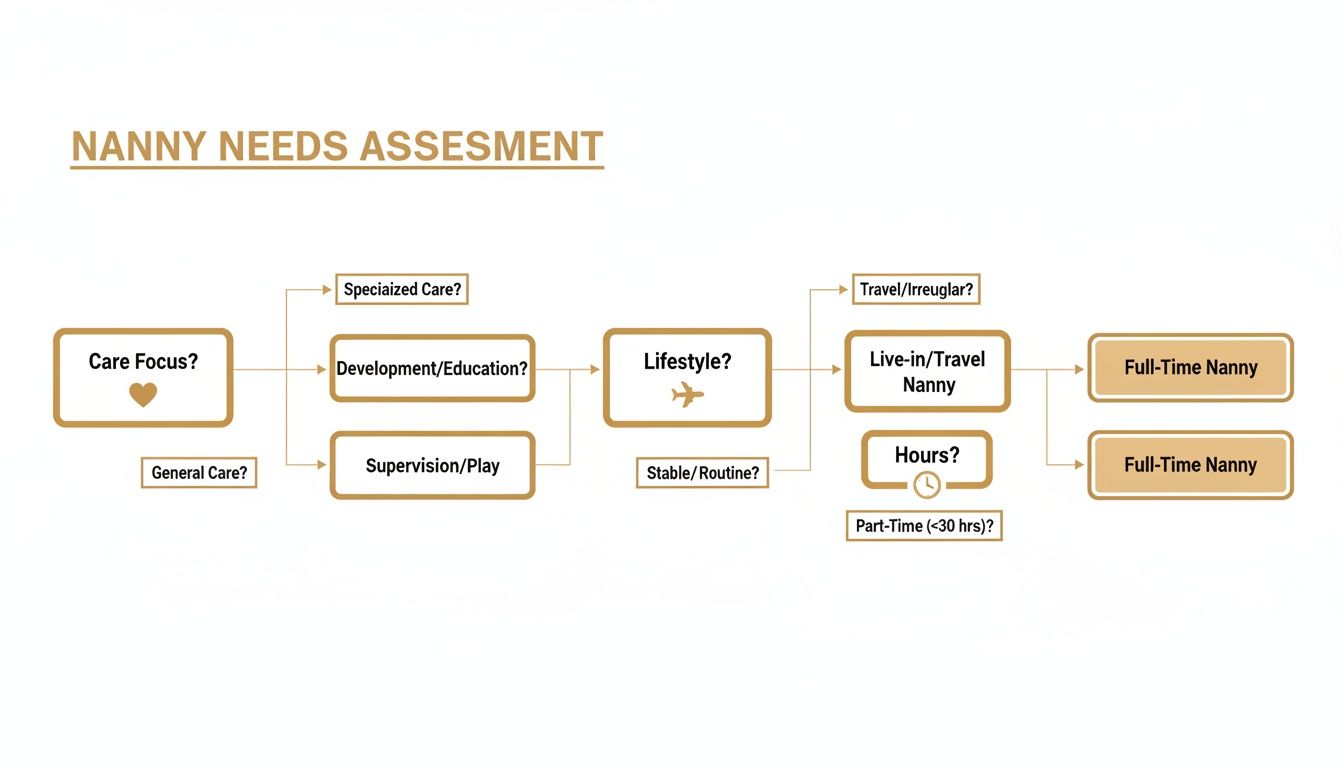
Mapping out your requirements like this makes it clear whether your priority is educational development, lifestyle compatibility, or complex scheduling needs. It gives your entire search a clear direction from the start.
The Art of the Insightful Reference Check
Formal checks are one thing, but references offer a window into a candidate’s real-world performance, temperament, and reliability. The trick is knowing how to get past the generic praise to uncover genuine insights.
Instead of asking, “Were they a good nanny?”, you need to dig deeper with specific, situational questions:
- “Could you tell me about a time they had to manage a particularly challenging situation with one of the children? How did they navigate it?”
- “How did they fit in with other household staff? Can you give me an example of how they demonstrated teamwork?”
- “Beyond the day-to-day care, what specific contributions did they make to the children’s development or education?”
The best reference checks feel more like a conversation than an interrogation. It’s crucial to listen for what isn’t being said. A moment’s hesitation or a vague answer can tell you just as much as a glowing review.
This meticulous approach is more critical than ever, especially as the UK faces a shrinking pool of qualified nannies. Official Ofsted figures revealed a drop of 270 home childcarers between March 2023 and March 2024, a trend that’s only picking up speed. With more competition for the very best talent, a partnership with a specialist agency is no longer a luxury—it’s a necessity. You can see more data in the full Nanny Salary Index report.
Working with specialist domestic staffing agencies like ours takes the weight of this intensive vetting process off your shoulders. We handle every detail, from the multi-layered background checks to the discreet and revealing reference interviews.
The table below shows just how different the process is when you have an expert team on your side.
Vetting Process Comparison: Agency vs Direct Hire
| Vetting Stage | Direct Hiring Approach (Typical) | Premier Agency Approach (Superstar Nannies) |
|---|---|---|
| Initial Screening | Reviewing CVs from public job boards. | In-depth, face-to-face interviews with pre-vetted candidates from a private network. |
| Background Checks | Standard UK DBS check. | Comprehensive global checks, including international criminal records for all previous countries of residence. |
| Qualification Vetting | Accepting copies of certificates provided by the candidate. | Direct verification with issuing institutions (e.g., Norland College, universities) to confirm authenticity. |
| Reference Checks | Calling 1-2 previous employers with generic questions. | Detailed, investigative conversations with multiple referees, using situational questions to assess character and capability. |
| Digital Footprint | Basic online search (e.g., Google, LinkedIn). | Professional social media and digital background analysis to ensure alignment with family values and discretion. |
| Right-to-Work | Sighting passport/visa documents. | Rigorous Home Office compliance checks and validation of all immigration and work-related documentation. |
Ultimately, this level of due diligence is what separates an adequate hire from an exceptional one. We ensure you are only ever presented with candidates who meet the absolute highest standards of excellence and integrity.
Mastering the Interview and Trial Period
A polished CV and glowing references will get a candidate in the door, but it’s the interview and, crucially, the trial period where you discover if they truly belong in your home. For families like yours, this isn’t just a quick chat. It’s a multi-stage process designed to peel back the layers and see a candidate’s genuine personality, how they solve problems on the fly, and their professional poise under pressure.
At this point, you’re moving past simply verifying experience. You’re assessing character, compatibility, and that intangible quality that separates a competent nanny from an exceptional one. It’s all about delving into scenarios that reflect the unique complexities of your life.

Conducting a Meaningful Interview
The best interviews for high-calibre nannies feel less like a formal Q&A and more like a strategic conversation. Of course, you’ll have your prepared questions, but the real magic happens when you listen intently and ask insightful follow-ups. You’re trying to understand how they think, not just what they’ve done.
We always recommend starting with a brief phone or video call. It’s a great way to establish a baseline connection and get the logistical details out of the way. The in-person interview, however, is where the real evaluation happens. This meeting absolutely should take place in your home, giving the candidate a genuine feel for the environment they’d be working in.
Using Scenario-Based Questions
Generic questions—”What are your strengths?”—get you rehearsed, polished answers. Scenario-based questions are different. They force a candidate to think on their feet, revealing their unfiltered approach to childcare and professional conduct.
Try weaving in questions that mirror your reality:
- “Imagine we’re travelling abroad and one of the children has a sudden medical emergency. Talk me through your immediate steps.” This isn’t just about procedure; it tests their ability to stay calm, be resourceful, and handle a high-stakes situation.
- “Describe your understanding of privacy and discretion when working within a high-profile home.” This hits a non-negotiable requirement head-on, gauging their grasp of professional boundaries and absolute confidentiality.
- “How would you navigate a disagreement with another member of household staff over the children’s schedule?” This tells you everything about their communication style, diplomacy, and whether they can be a true team player.
A candidate’s response to these scenarios is incredibly revealing. You’re looking for answers that are thoughtful, child-focused, and show a clear understanding of the unique demands of your household.
For more inspiration, our guide on essential interview questions for nannies has a comprehensive list to help you prepare.
The Non-Negotiable Paid Trial Period
After a successful round of interviews, a paid trial period is the single most effective tool you have for confirming your choice. Let’s be clear: this isn’t an informal meet-and-greet. It’s a structured, professional assessment and the best predictor of long-term success when hiring for nanny roles. It lets you see the real candidate, away from the formalities of the interview setting.
Structuring the trial properly is key. It could be a weekend or a full week, depending on your schedule and how complex the role is.
What You’re Looking For During a Trial:
- Genuine Child Interaction: How do they actually connect with your children when they think no one’s watching? Do they take initiative, dream up creative games, and handle tricky moments with patience and grace?
- Seamless Household Integration: How do they fit in with other staff? Are they respectful of established routines and a clear communicator? You need someone who slots into the existing team, not disrupts it.
- Inherent Adaptability: Can they tune into your family’s unique rhythm and pace without needing constant direction?
Paying the candidate their full, pro-rated salary during the trial is simply standard professional practice. It shows respect for their time and expertise, and it sets the tone for a positive working relationship from day one. This trial is your final confirmation that you haven’t just found a qualified nanny, but the right nanny for your family.
Crafting the Definitive Nanny Contract
Once you’ve found the perfect nanny, the final step is creating a comprehensive employment contract. This is far more than a formality; it’s the very foundation of a professional, long-lasting relationship. For families with complex international lifestyles, this document needs to go well beyond standard templates, serving as a clear and detailed guide for every possible situation.
A well-drafted contract is your best tool for preventing future misunderstandings. It sets firm, professional boundaries from day one, transforming unspoken expectations into concrete agreements. This ensures both you and your nanny are protected and completely aligned on every aspect of the role.
The Core of the Agreement
Every nanny contract must clearly lay out the fundamentals of the job. These clauses form the basic architecture of the agreement and should be written to eliminate any ambiguity. Think of them as the non-negotiable pillars of your working relationship.
At a minimum, your agreement must specify:
- Pay and Schedule: Detail the gross salary (whether hourly or annual), how often they’ll be paid (e.g., weekly, monthly), and the payment method. Crucially, it should also outline how overtime is calculated and paid, ensuring full compliance with UK employment law.
- Working Hours: Define the nanny’s standard working week with exact start and end times. Be sure to include expectations for any babysitting, on-call periods, or what a “travel day” looks like in terms of hours.
- Duties and Responsibilities: List everything. Go from primary childcare tasks down to secondary duties like managing the children’s laundry, preparing their meals, or keeping play areas organised. The more detail, the better.
- Benefits and Time Off: Clearly state all statutory entitlements, like paid holiday allowance, sick pay, and pension contributions. If you’re offering additional perks such as private health insurance or a gym membership, this is the place to formalise them.
Essential Clauses for High-Profile Families
For UHNW and international families, the contract has to do more heavy lifting. It needs to address unique circumstances surrounding privacy, security, and frequent travel. These advanced clauses are absolutely critical for protecting your family and ensuring things run smoothly, especially when your life isn’t confined to a single post code.
A truly robust contract anticipates challenges before they arise. Including strong clauses on confidentiality and social media isn’t about a lack of trust; it’s about establishing a professional standard that protects everyone involved.
Make sure your agreement includes these vital protections:
- Non-Disclosure Agreement (NDA): This is non-negotiable. A professionally drafted NDA legally binds the nanny to complete confidentiality about your family life, home, and personal affairs—both during and after their employment ends.
- Social Media Policy: This clause must be explicit. It should state clearly that no photos, videos, or identifiable information about the children or the family can be shared on any social media platform, ever.
- Travel and Relocation Terms: If the role involves travel, outline every detail. This includes who is responsible for visa sponsorship, how travel expenses are handled, accommodation standards, and any per diems or travel stipends.
- Medical Care Protocols: Your nanny contract should clearly outline the protocol for administering any medication. It’s wise to reference established medical guidelines for children to ensure care is always safe and consistent.
To help you visualise this, here’s a breakdown of the most critical clauses we insist on for our clients’ contracts.
Essential Clauses for an Elite Nanny Contract
| Clause Category | Key Considerations | Example Provision |
|---|---|---|
| Confidentiality & NDA | Scope, duration (post-employment), and consequences of breach. | “The Nanny agrees not to disclose any information relating to the family’s private affairs, business, or lifestyle, both during and after the term of employment.” |
| Social Media & Privacy | Explicit prohibition of posting images or details about the children/family online. | “No photographs, videos, or personal information concerning the children or the Employer’s family may be shared on any social media or public platform.” |
| Travel & Logistics | Visa responsibilities, accommodation standards, per diems, and working hours during travel. | “All visa application costs will be covered by the Employer. Separate travel terms, including per diems, will be agreed upon in writing prior to each trip.” |
| Security Protocols | Guidelines for interacting with household staff, handling visitors, and emergency procedures. | “The Nanny will adhere to the household’s established security protocols and will not permit unaccompanied visitors onto the property without prior consent.” |
These clauses aren’t just legal jargon; they are practical tools that create a secure and professional environment for your family and your nanny.
Your Legal and Financial Duties
When you hire a nanny, you become an employer in the eyes of the law, and that comes with serious financial and legal responsibilities. Managing payroll, tax, and National Insurance contributions correctly isn’t optional—it’s a requirement. You must register as an employer with HMRC and operate a PAYE (Pay As You Earn) scheme for your nanny.
It is also vital to have the right protection in place. Understanding the specifics of specialised insurance for nanny employers is essential for shielding yourself from liability and other unforeseen events.
Getting these legal and financial details right from the very beginning is paramount. Working with a specialist agency like Superstar Nannies ensures your contract is not only legally compliant but also perfectly crafted for the unique demands of your household, giving you complete peace of mind.
Onboarding Your Nanny for Lasting Success
So, you’ve found the perfect nanny and the contract is signed. It’s tempting to think the hard work is over, but this next step is arguably the most crucial for setting up a successful, long-term relationship. A well-planned, thoughtful onboarding process is your chance to properly welcome your new nanny and give them everything they need to excel from day one.
A great onboarding experience doesn’t just show someone the ropes; it makes them feel like a confident, integrated part of your household. It’s an investment that pays back tenfold in loyalty, performance, and—most importantly—the exceptional care your children receive.

Creating Your Household Manual
If I could recommend one single tool for onboarding, it would be a comprehensive household manual. Think of it as the ultimate guide to your family’s world, a living document that answers questions before they’re even asked. It provides the clarity and consistency a new nanny needs to feel settled, especially during those first few weeks.
This isn’t just a list of dos and don’ts. It’s a detailed, organised resource that empowers them.
What to include in your household manual:
- Children’s Information: A complete profile for each child is a must. Detail their daily routines, sleep schedules, favourite meals, any allergies, and those little comfort habits that only you know.
- Emergency Protocols: Don’t leave anything to chance. Lay out a clear, step-by-step plan with emergency contacts (parents, doctors, trusted neighbours), what to do in medical situations, and where to find the first-aid kits.
- Household Rules & Preferences: This is where you outline your family’s philosophy on discipline, screen time, and nutrition. For instance, providing clear guidelines on things like safe sleep practices for babies ensures care is always consistent with your standards.
- Security & Logistics: Details on alarm systems, key contacts for household maintenance, and any specific security protocols for your property are non-negotiable.
With this manual in hand, your nanny can handle situations confidently, knowing their actions are perfectly aligned with your family’s expectations.
Fostering a Collaborative Team Environment
In a fully staffed home, a nanny’s smooth integration is paramount. They need to understand their role within the wider household team to avoid any friction and foster a sense of true collaboration.
Make a point to schedule formal introductions with other key staff, like the house manager, chef, or your personal assistant. Take a moment to explain each person’s role and responsibilities, clarifying how the nanny’s duties will intersect with theirs. It’s a simple gesture that goes a long way in establishing a culture of teamwork and mutual respect from the outset.
A nanny who feels like a valued part of a cohesive team is far more likely to be engaged, committed, and stay for the long haul. Their success really hinges on clear communication and a welcoming environment that you and your existing staff create together.
Strategies for Long-Term Retention
Hiring an exceptional nanny is a significant investment; keeping them is how you protect it. Top-tier professionals don’t just want a job; they want a career where they feel respected, supported, and truly valued. Building that kind of atmosphere is the secret to fostering loyalty and guaranteeing continuity of care for your children.
Here are a few proven strategies that actually work:
- Establish Regular Communication: Set aside a dedicated time for weekly check-ins. This isn’t for micromanaging—it’s a space to discuss the children’s progress, talk through any challenges, and offer constructive feedback in a supportive way.
- Conduct Performance Reviews: Formal annual reviews are a professional standard for a reason. They offer a chance to celebrate successes, set goals for the year ahead, and review compensation. This shows you’re serious about their contribution and career growth.
- Provide Professional Development: Show you’re invested in them as a professional. Supporting further training or certifications—whether it’s a course on early childhood development or advanced first-aid—is a powerful statement.
Ultimately, investing in a structured onboarding process and a supportive environment isn’t just a perk for your nanny. It builds a foundation of trust and professionalism that ensures your children get the absolute best care for years to come.
Conclusion: Your Partner in Hiring a Nanny
The journey of hiring for a nanny is about more than just filling a position; it’s about finding a trusted professional who will enrich your children’s lives and seamlessly support your family’s lifestyle. From defining your unique needs to meticulous vetting, conducting insightful interviews, and crafting a robust contract, every step is crucial for long-term success. By following this structured approach, you can navigate the process with confidence and clarity, ensuring you find the perfect match.
Ready to find a professional who meets your family’s exacting standards? The expert team at Superstar Nannies provides bespoke, discreet placements for elite households worldwide, ensuring a perfect fit for your unique lifestyle. Contact us today for a private consultation.
FAQs About Hiring For Nanny Roles
What is the difference between a nanny and a governess?
The key difference is their primary focus. A nanny is centered on the holistic care of your children, managing daily routines, meals, play-based learning, and emotional development. A governess, in contrast, is an educator first. They are a qualified professional whose main responsibility is the children’s formal, often curriculum-led, education within the home.
How long does the nanny hiring process take?
You should realistically plan for the process to take anywhere from four to twelve weeks. This timeframe allows for a thorough search, multiple interview stages, comprehensive vetting, reference checks, and a meaningful trial period. For highly specialised or international roles requiring visas, the process can take longer. Starting your search three months in advance is always a good idea.
Why is a paid trial period so important when hiring for a nanny?
A paid trial is non-negotiable because it moves beyond interviews to real-world interaction. It’s the best way to see how a candidate genuinely connects with your children, adapts to your family’s rhythm, and integrates with other household staff. It provides both you and the nanny with the confidence that the fit is right before committing to a long-term contract.
What are the main benefits of using an elite nanny agency?
Using a specialist agency offers unparalleled access, security, and expertise. You gain access to a curated pool of exceptional, pre-vetted candidates you won’t find on public job boards. The security comes from exhaustive, international background checks that agencies manage. Finally, you benefit from their expertise in handling complex contracts, visas, and the unique needs of high-profile households.