


Hiring a nanny is one of the most personal and significant investments you’ll make in your family’s wellbeing. When my partner and I started this journey, we quickly realised that getting the budget right from the start was absolutely crucial. The true cost goes well beyond a simple hourly rate. To attract a wonderful professional who would become a part of our children’s lives, we needed to understand the full financial picture—from regional salary differences to the non-negotiable employer costs.
Understanding the True Cost of Hiring a Nanny
When I first speak with families, one of the first things we tackle is the budget. It’s so easy to focus on the gross hourly wage, but I’ve learned from experience that it’s just the starting point of the financial puzzle. A successful, long-term placement always begins with a clear-eyed view of the total investment, which prevents any unwelcome surprises down the line. It’s about creating a sustainable relationship from day one.
The reality is that nanny wages have climbed steeply over the last five years, increasing by around 50%. For the 2024/25 tax year, families in Greater London and the Home Counties are looking at an average hourly rate of about £17.86. That translates to an annual gross salary of £46,436, which is a 5.5% jump from last year alone.
Outside of the capital, the average is a bit lower at £15.77 per hour, or roughly £41,002 annually. You can get a deeper insight into these salary trends and what they mean for your budget in this detailed overview of nanny pay expectations.
To give you a clearer picture, here’s a quick breakdown of what you can expect to budget for a full-time nanny, based on location.
Estimated Annual Nanny Costs At A Glance
| Region | Average Hourly Rate (Gross) | Estimated Annual Salary (Gross) | Year-on-Year Change |
|---|---|---|---|
| Greater London & Home Counties | £17.86 | £46,436 | +5.5% |
| Rest of the UK | £15.77 | £41,002 | +4.9% |
This table illustrates the core salary component, but please remember, the total cost to you as an employer will be higher once mandatory contributions are added.
Beyond the Basic Salary
Simply multiplying the hourly rate by the number of working hours won’t give you the final figure. As an employer, you’re legally responsible for several additional expenses that add a significant percentage to your total outlay. I remember feeling a bit overwhelmed by these at first, but they aren’t optional extras; they’re essential for being a compliant and fair employer.
Make sure you factor these key costs into your budget:
- Employer’s National Insurance Contributions: This is a mandatory tax you pay on your nanny’s earnings once they cross a certain threshold.
- Workplace Pension Contributions: If your nanny is eligible based on age and earnings, you must enrol them in a pension scheme and make contributions.
- Payroll Service Fees: I always recommend using a professional payroll service. They handle the PAYE, tax deductions, and payslips correctly, saving you a massive headache for a relatively small monthly or annual fee. It was a lifesaver for us.
- Employers’ Liability Insurance: This is a legal must-have. It protects both you and your nanny in the unfortunate event of a workplace accident or injury.
Forgetting these “hidden” costs is the single most common mistake I see families make. Budgeting for them from day one ensures you can offer a competitive and fully legal package that attracts the top-tier professionals you’re looking for. It shows you’re a serious and respectful employer.
This visual gives a great snapshot of how different childcare arrangements, costs, and working hours compare, putting your decision into a broader context.
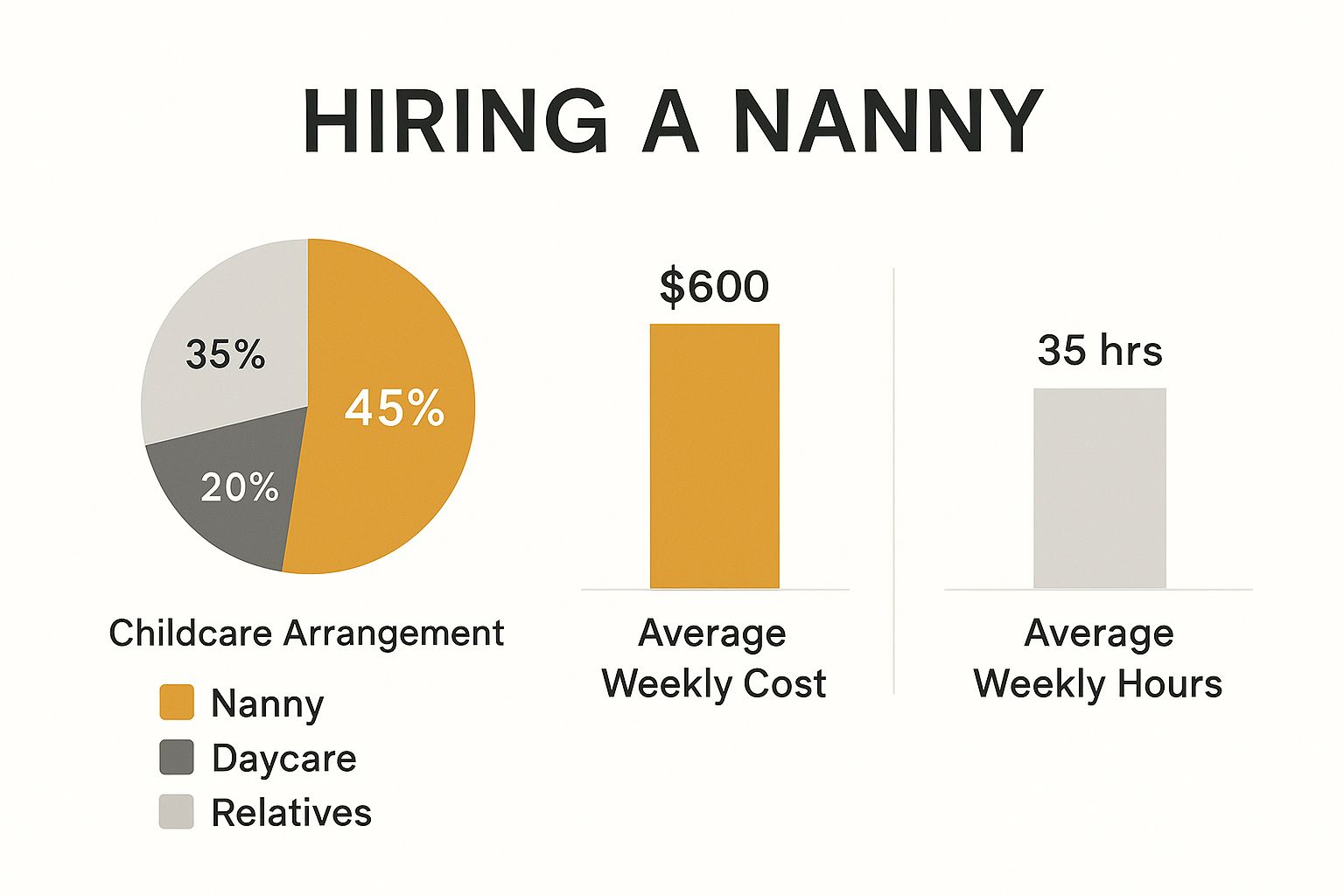
As you can see, the data consistently shows that nannies remain a preferred choice for many families, a testament to the value placed on dedicated, in-home care.
How Specialised Skills Influence Pay
The role of a modern nanny often goes far beyond basic childcare. As families look for more specialised support, candidates with unique skills can, quite rightly, command higher salaries.
This is especially true for nannies who bring extra value that directly supports a child’s development or helps with the smooth running of the household.
For instance, a nanny who is qualified to support children with Special Educational Needs (SEN), has tutoring experience, or is fluent in a second language can expect a salary premium of up to 20%. The same goes for those who can take on PA-type duties for the family. When you’re defining what you need, think carefully about whether these skills are a priority and be prepared to adjust your budget to attract that level of talent.
Defining What Your Family Truly Needs

Before you even glance at a single CV or speak to an agency, the most important work happens right at home, with a cup of tea and a notebook. The journey to hiring a nanny who truly fits doesn’t start with searching; it starts with a deep, honest look at what your family really needs and—just as crucially—who you are as a family.
I’ve seen it time and time again: families rush this initial stage, maybe grabbing a generic job description off the internet. This approach almost always backfires because it misses the unique rhythm and values of their home. Every family’s dynamic is different, and a one-size-fits-all job description simply doesn’t capture the heart of the role.
Think of this process not as writing a job advert, but as creating a detailed blueprint for your ideal candidate. This clarity will become your most powerful tool, helping you find someone who doesn’t just tick boxes but genuinely becomes a positive, integrated part of your family’s life.
The Core Practicalities
First things first, let’s map out the absolute non-negotiables. These are the logistical cornerstones of the role, and they’ll shape your entire search from the ground up. Being specific and realistic here saves a world of trouble later.
You need to get crystal clear on these points:
- Hours and Schedule: Are you after a full-time, Monday-to-Friday professional? Or is your lifestyle more fluid, requiring flexibility for evenings, weekends, or international travel? Think carefully about your own work schedule, social life, and whether you might need rota care.
- Live-In or Live-Out: This is a huge decision. A live-in nanny provides incredible flexibility but means you need to offer private, comfortable living quarters. A live-out nanny, on the other hand, helps maintain clearer boundaries between work and home life.
- Core Childcare Duties: List everything. Be exhaustive. This means school runs, preparing healthy meals, organising playdates and activities, overseeing homework, and handling bedtime routines.
- Household Responsibilities: Be precise about any extra tasks. Will the role include the children’s laundry, keeping their rooms and play areas tidy, or other light housekeeping? Unspoken expectations here are a common source of friction.
From my experience, ambiguity is the single biggest threat to a successful placement. A detailed list of duties protects both you and your nanny, making sure everyone is on the same page from day one. It turns a vague idea into a concrete, professional role.
Capturing Your Family’s Essence
Beyond the schedule and the to-do list lies the real heart of the matter: your family’s culture. This is the intangible element that separates a good nanny from the right nanny. A candidate can have a perfect CV, but if they don’t align with your values and parenting philosophy, it will never be a lasting relationship.
Take some time to consider these more personal elements:
- Parenting Style: Are you a family that thrives on structure and routine, or are you more relaxed and child-led? It’s vital that your nanny’s approach complements your own to give your children consistency.
- Family Values: What principles do you live by? Perhaps it’s a focus on outdoor activities and minimal screen time. Or maybe it’s a deep appreciation for creativity, multilingualism, or formal manners.
- Personality and Temperament: Think about the energy you want to bring into your home. Are you looking for someone calm and serene, or do you need an energetic, bubbly personality to keep up with active children? The right personality fit creates harmony.
This level of detail is essential for any professional hire. Much like with a nanny, clearly defining your needs before hiring a service is a critical first step for any role you’re looking to fill. Taking the time to articulate these specifics doesn’t just attract better candidates; it makes the whole hiring process smoother and far more successful.
How to Find and Attract Great Nanny Candidates

Now that you have a detailed blueprint of your ideal nanny, it’s time to move into the active search. This is where all that thoughtful preparation really starts to pay off, helping you focus your efforts and attract professionals who are a genuine match for your family.
The search itself can feel a bit overwhelming, but it really boils down to knowing where to look and how to present your role as a truly compelling opportunity. In my experience, families see the best results when they use a mix of trusted methods rather than putting all their eggs in one basket.
Reputable Nanny Agencies
For families who value discretion, professionalism, and an efficient process, a high-end nanny agency is almost always the best way forward. Agencies are specialists; their entire business is built on an extensive, private network of pre-vetted, experienced childcarers.
Essentially, a good agency does the initial heavy lifting for you. We verify credentials, chase up references, and conduct the first round of interviews, saving you an incredible amount of time.
Working with an agency provides a few distinct advantages:
- Access to Top Talent: The very best career nannies often work exclusively through agencies they trust.
- Comprehensive Vetting: We conduct rigorous background checks, giving you complete peace of mind.
- Bespoke Matching: A great consultant really gets to know your family’s unique culture and needs, meaning they only present candidates who are a genuinely strong fit.
This route provides a curated shortlist of qualified professionals, sparing you from an avalanche of unsuitable applications.
Curated Online Platforms
Online platforms and job boards have certainly become a popular tool, offering a vast pool of candidates and direct control over the process. Be warned, though: this approach requires a significant time investment and a very keen eye for detail.
If you choose this path, you essentially become the recruiter. You’ll be responsible for sifting through dozens, if not hundreds, of applications, many of which simply won’t be right. It is absolutely crucial to be meticulous in your vetting—checking every reference and verifying every qualification yourself.
I once spoke with a family who had spent six weeks reviewing online applications, only to find that most candidates simply lacked the specific experience they needed. While these platforms can work, you must be prepared for the time commitment it takes to do it properly.
The Power of Personal Referrals
A referral from a trusted friend or colleague can feel like striking gold. When a nanny comes with a glowing personal recommendation, they’ve already passed a major trust barrier. It’s a fantastic way to find someone whose work ethic and personality are already known and respected within your circle.
Even so, it’s vital to remember that what works for one family won’t necessarily work for another. Even with the strongest referral, you absolutely must conduct your own full interview and vetting process to ensure the nanny is the right fit for your unique family dynamic and requirements.
Crafting a Compelling Job Advert
No matter where you decide to post your position, the job advert is your first impression. It needs to do more than just list duties; it has to sell the role to the right person. Professional nannies are in high demand and can afford to be selective about the positions they pursue.
Here’s how to make your advert stand out from the crowd:
- Lead with Your Family’s Values: Start with a short, warm paragraph about your family’s personality and what makes your home a positive place to work.
- Be Explicit About the Role: Use that detailed list of duties you created earlier. Clarity is everything.
- Highlight the ‘Why’: Explain why this is a fantastic opportunity. Mention any perks like international travel, private accommodation, or support for professional development.
- State Compensation Clearly: Always, always state the gross salary range. It signals that you are a professional employer and immediately filters out candidates who are outside your budget.
A well-crafted advert that communicates respect for the profession is your best tool for attracting serious, high-calibre candidates. For a deeper dive, our comprehensive guide on finding a nanny offers even more detailed strategies.
Mastering the Interview and Vetting Process
This is where the whole process gets real. You’re moving from a well-written CV on paper to a face-to-face conversation, and it’s your first chance to see if a candidate’s personality, professionalism, and childcare philosophy genuinely click with your family’s. I always tell my clients to think of this as a multi-stage process, not a single event. Each step should build your confidence.
A properly structured interview uncovers so much more than rehearsed answers. It’s an opportunity to gauge a candidate’s emotional intelligence, see how they solve problems under pressure, and get a feel for how they would truly slot into the rhythm of your home. Rushing this stage is a classic mistake that often leads to a poor fit, so it’s worth investing the time to get it right.
Moving Beyond Basic Questions
The standard questions—”What’s your experience?” or “Why did you become a nanny?”—are perfectly fine as an icebreaker, but they rarely give you the depth you need. The real insights come from putting candidates into a hypothetical situation and seeing how they react.
You want to understand how they think, not just what they’ve done. These scenario-based questions shift the conversation from theory to practice, giving you a brilliant glimpse into their on-the-job character.
Here are a few examples I find particularly revealing:
- For Problem-Solving: “Imagine you’re at the park. One child has a fall and is crying, while the other starts to wander off. Talk me through what you do in that exact moment.”
- For Emotional Intelligence: “How would you handle a situation where a child is inconsolable after being told off by a parent and is now refusing to engage with you?”
- For Alignment: “Describe your approach to discipline when a five-year-old flatly refuses to do something simple, like put their toys away.”
These kinds of questions don’t have one “correct” answer. What you’re looking for is their thought process, their ability to stay calm, and whether their instinctive approach resonates with your own parenting style.
The goal isn’t to catch them out; it’s to start a meaningful dialogue about childcare. The best candidates will welcome these questions as an opportunity to demonstrate their professional expertise and give you a real sense of who they are.
For a deeper dive, you might find it helpful to review our list of top interview tips for parents to make sure you’re covering all the crucial bases.
The Critical Role of a Paid Trial Day
An interview is one thing; seeing a nanny in your home, with your children, is something else entirely. That’s why I consider a paid trial day—or a working interview—to be an absolutely non-negotiable part of the hiring process. It’s your only chance to observe how a candidate truly interacts with your children and adapts to your home environment in real-time.
A trial day provides invaluable insights that a formal Q&A simply can’t. Watch how they engage. Do they get down on the floor to play? Are they proactive, or do they hang back waiting for instructions? It’s a practical assessment of their skills, energy, and most importantly, their natural chemistry with your family.
Remember, this is a two-way street. It also gives the nanny a chance to see if your family is the right fit for them. A successful placement is built on mutual comfort and respect, and the trial day is the very first test of that connection.
Conducting Diligent Checks
Once you’ve found your front-runner, the final steps are all about verification and safety. You can never, ever skip the reference and background checks, no matter how wonderful a candidate seems. This is your fundamental due diligence as both a parent and an employer.
When you call their references, go beyond the surface-level questions. Instead of asking, “Was she a good nanny?”, try digging a bit deeper with more specific queries:
- “Could you describe a time she handled a particularly difficult situation with your children?”
- “What was her approach to communicating with you as parents day-to-day?”
- “If you had to pick one, what would you say is her greatest strength as a childcarer?”
Finally, a comprehensive Disclosure and Barring Service (DBS) check is mandatory. For anyone working with children in the UK, an Enhanced DBS check is the required standard. This provides crucial information about a candidate’s criminal record and is a fundamental safeguarding measure. Always insist on seeing an up-to-date certificate or use the update service to ensure it’s current. It’s the ultimate step in hiring a nanny you can trust completely.
Your Legal Duties as a Nanny Employer

So, you’ve found the perfect nanny. That moment of relief and excitement is amazing! This is where a new and important relationship begins. By hiring a nanny, you are officially taking on the role of an employer, and that comes with a set of legal responsibilities. It can feel a little daunting at first, but getting a handle on your duties from the very start is the key to building a professional, respectful, and lasting relationship.
This isn’t about getting bogged down in legal jargon. It’s about putting a solid, fair foundation in place. Complying with UK employment law protects not just your nanny but your family too, ensuring everyone is absolutely clear on their rights and obligations. Let’s walk through exactly what you need to do, from the contract to tax and pensions.
Crafting a Compliant Employment Contract
A formal employment contract isn’t just a nice-to-have—it’s a legal requirement. You must provide your nanny with a written statement of their employment particulars within two months of their start date. My advice? Always have a comprehensive contract signed and agreed upon before they even walk through the door on day one.
Think of this document as your shared source of truth. It prevents misunderstandings down the line by clearly spelling out the terms for everyone involved. A thorough, legally sound contract should cover several key areas.
It absolutely must detail:
- Job Description and Duties: A clear list of all their expected responsibilities.
- Working Hours: This includes start and end times, days of the week, and how overtime will be handled.
- Salary: The agreed-upon gross annual or hourly wage. A word of warning: never agree to a net wage, as it can leave you liable for any tax code changes.
- Holiday Entitlement: The statutory minimum is 5.6 weeks per year, which includes bank holidays.
- Sick Pay: Details on Statutory Sick Pay (SSP) and any extra contractual sick pay you might offer.
- Notice Period: The amount of notice required from both you and your nanny to end the contract.
As a nanny employer, you’ll be dealing with legal documents, and understanding them is crucial. It’s worth checking out some expert tips for contract review for non-lawyers to make sure you’re comfortable with every detail of the agreement.
Navigating PAYE Tax and National Insurance
As an employer, it’s your responsibility to deduct your nanny’s income tax and National Insurance contributions from their salary and pay these directly to HMRC. This is the Pay As You Earn (PAYE) system. On top of their salary, you’ll also need to pay Employer’s National Insurance contributions.
Honestly, setting up and running a payroll can be complicated and very time-consuming. This is why I always recommend using a specialist nanny payroll company. For a small fee, they handle everything: registering you as an employer, providing monthly payslips, calculating all the deductions, and managing submissions to HMRC.
Using a payroll service is the single best investment you can make for peace of mind. It guarantees you are fully compliant, takes the administrative headache off your plate, and lets you focus on what really matters—building a great relationship with your new nanny.
Understanding the National Living Wage
Paying your nanny fairly isn’t just good practice; it’s the law. In 2025, nanny wages in the UK have been directly impacted by government-mandated increases to the National Living Wage. From 1 April 2025, the minimum hourly rate for workers aged 21 and over, including nannies, rose from £11.44 to £12.21.
This legislation means all employed nannies—whether live-in or live-out, full-time or part-time—must receive at least this minimum pay. Underpaying can lead to serious consequences, including having to pay backdated wages for up to six years, fines of up to £20,000 per nanny, and even being publicly named by the Department for Business and Trade.
For live-in nannies, there’s also an accommodation offset allowance, which was updated in 2025 from £69.93 to £74.62 per week. This is an amount you can legally deduct from their gross pay to account for the housing and meals you provide.
Your Pension Auto-Enrolment Obligations
Another key responsibility is setting up a workplace pension. Under UK law, you must automatically enrol your nanny into a pension scheme and make contributions on their behalf if they meet certain criteria.
Your nanny is eligible if they are:
- Aged between 22 and the State Pension age.
- Earn more than £10,000 per year.
You are required to contribute a minimum percentage of their qualifying earnings, and your nanny will contribute a percentage too. Once again, a reputable nanny payroll service can manage this entire auto-enrolment process for you, from setting up the scheme to ensuring the correct contributions are made every month.
Taking care of these legal duties properly from day one shows your professionalism and respect for your nanny’s role. It’s the cornerstone of a strong, positive working relationship that will last for years.
Your Nanny Hiring Questions, Answered
Hiring a nanny for the first time is a big step, and it’s completely normal to have a few lingering questions as you get close to making an offer. Moving from finding the right person to actually becoming their employer involves a few crucial details that can often cause confusion.
I’ve put together some straightforward answers to the questions I hear most often from families. Think of this as your final checklist to ensure you’re completely prepared. Getting these things right from the start helps build a relationship based on clarity and respect—the perfect foundation when you’re welcoming someone new into your home.
What’s the Difference Between Gross and Net Pay?
This is probably the most common financial question I get, and it’s a critical one to understand.
- Gross pay is the full salary you agree on before any deductions are made for tax or National Insurance.
- Net pay is the ‘take-home’ amount that actually lands in your nanny’s bank account after those deductions.
In the UK, it is both a legal requirement and standard professional practice to agree on a gross salary with your nanny. This isn’t negotiable. By agreeing on a gross figure, you protect yourself from any unexpected tax bills if your nanny’s tax code changes during their employment, which happens more often than you might think.
Make sure the gross wage is clearly stated in the employment contract. It avoids any confusion down the line and establishes a professional standard from day one.
How Much Should We Expect to Pay?
Nanny salaries can vary quite a bit depending on location, the nanny’s experience, and the specific demands of the role. Unsurprisingly, London remains the region with the highest nanny wages in the UK, a direct reflection of its higher cost of living and the strong demand for top-tier childcare.
As of 2025, here’s a rough guide for London:
- Live-out nannies: Expect to pay between £16 and £20 net per hour.
- Live-in nannies: A typical weekly salary is between £500 and £700 net.
- Part-time nannies: These roles often command a slightly higher hourly rate, usually from £17 to £22 net, to make up for the fewer hours.
For more detailed insights, you can find a great breakdown of current London nanny costs on elisas-london-nannies.co.uk.
What pushes a salary towards the higher end? It’s usually a combination of formal qualifications, like a CACHE Level 3 diploma, and a proven track record in similar high-profile roles.
Do I Need to Provide a Pension for My Nanny?
Yes, in most cases, you absolutely do. If your nanny is over the age of 22 and earns more than £10,000 per year, UK law mandates that you set up and contribute to a workplace pension for them.
This process is called auto-enrolment. It’s not optional, and failing to comply can lead to hefty fines from The Pensions Regulator. I can’t stress this enough. The easiest way to handle this correctly is by using a specialist nanny payroll service. They can manage the entire pension setup and contribution process, giving you complete peace of mind.
How Should We Handle a Probationary Period?
A probationary period is an excellent idea and should be clearly written into the employment contract. It typically lasts between three and six months. The first few weeks are a critical adjustment for everyone, and this formal timeframe gives both you and your nanny a chance to make sure the fit is genuinely right.
My personal advice? Start with a detailed handover. Go through all the essential routines, house rules, emergency contacts, and your children’s little quirks and preferences. Then, during the probation, schedule regular but informal check-ins. A quick chat once a week to see how things are going can be invaluable.
This keeps the lines of communication open, helps build trust, and lets you iron out any small issues before they become bigger problems. It’s a simple step that makes a huge difference.
At Superstar Nannies, we handle every detail of the hiring process with the discretion and professionalism your family deserves, from sourcing world-class candidates to advising on contracts and payroll. Find the perfect support for your home by exploring our bespoke services at https://superstar-nannies.com.
Article created using Outrank