


Bringing someone into your home to help with domestic tasks is a big decision, but it’s rarely just about having a clean house. From my own experience, I can tell you it’s about reclaiming your most precious commodity: time. What started for me as a perceived luxury quickly became an essential support system, transforming our daily life from a constant juggle to something far more manageable.
The Real Value of Hiring Domestic Help

Often, the first step is a mental one. You have to give yourself permission to stop thinking of it as an extravagance and start seeing it for what it truly is—a smart investment in your family’s well-being and your own sanity.
When you hand over the management of your household, you’re not just getting spotless floors and tidy rooms. You’re carving out space in your life for what really matters. For us, it meant more unhurried bedtime stories with the kids. For a friend of mine, it was the freedom to focus completely on launching her own business. For many, it’s simply the profound peace of mind that comes from living in a calm, organised space.
The knock-on effect is huge. It reduces that constant, low-level stress of a never-ending to-do list and brings a sense of order to the beautiful chaos of modern life.
A Growing Trend in UK Households
This isn’t just a personal observation; it’s a shift happening all across the country. The domestic cleaning industry in the UK is booming, now valued at an estimated £59.8 billion. This isn’t just a number—it reflects a deep change in how we think about home life.
Right now, around 17% of UK households employ a domestic cleaner. That figure shoots up to 40% for those under 35, which tells you a lot about how younger generations see this service as a non-negotiable part of a well-run life. You can read more about the future of the UK cleaning industry over at Spotless Homes.
I’ve designed this guide based on my own journey and years of experience helping others, hoping to give you a clear, friendly roadmap for getting this right. It’s all about helping you make confident, informed choices.
My own journey into hiring household support wasn’t just about outsourcing chores. It was a strategic decision to buy back my time, which let me be a more present parent and more focused at work. That’s the real return on investment.
What This Guide Will Cover
We’ll go through the entire process together, tackling the key decisions you’ll need to make along the way. Think of me as your guide, sharing what I’ve learned to help you navigate everything from the big picture to the smallest details.
Here’s a glimpse of what’s ahead:
- Defining Your Needs: We’ll get crystal clear on the exact duties, schedule, and standards your household requires.
- Agency vs Private Hire: I’ll share my insights to help you weigh up the pros and cons of each route so you can decide what’s best for your family.
- Legal Responsibilities: We’ll untangle your duties as an employer in the UK, making sure you’re fully compliant and feel confident in your new role.
By the end, you’ll have the confidence to find not just a cleaner, but a trusted professional who genuinely enhances your home and simplifies your life.
Defining Your Needs to Attract the Right Person
Before you even think about posting an ad, take a moment to be crystal clear about the role you’re trying to fill. Trust me, just thinking “I need some help around the house” is a recipe for disaster; you’ll get a flood of applicants who aren’t the right fit. Specificity is your best friend here. It acts as a powerful filter, ensuring only genuinely suitable candidates even consider applying.
From my experience, the most successful, long-term placements always start with the family taking a quiet moment to do a detailed audit of their home’s unique rhythm. Don’t just jot down a list of chores. Think about the flow of your week, the non-negotiable standards you want to maintain, and the specific needs of everyone in the household. Getting this right from the outset is the foundation of a great working relationship.
This initial groundwork prevents so many headaches down the line. It manages expectations for both you and your future employee, creating a role someone can step into and truly succeed in because the boundaries and duties are clear from day one.
General Housekeeping vs Deep Cleaning Duties
First things first, let’s get clear on the different layers of cleaning. It’s a very common mistake to lump everything together, but the best professionals often specialise. Understanding the distinction helps you figure out the exact skill set you need to hire for.
- General Housekeeping: These are the daily and weekly tasks that keep your home running smoothly. Think making beds, tidying common areas, wiping down kitchen counters, managing the laundry, and taking out the bins. It’s the constant upkeep that makes a house feel like a home.
- Deep Cleaning: This is the more intensive, less frequent work. We’re talking about cleaning inside the oven and fridge, washing windows, scrubbing grout until it gleams, and shampooing carpets.
- Specialised Care: Does your home contain fine art, antiques, silver, or delicate surfaces like marble or cashmere? These items demand specific knowledge and a careful touch. If this is you, it’s not a “nice-to-have”—it’s a core requirement you can’t compromise on.
By separating these duties, you can make a strategic choice: do you need one person who can do it all, or would you be better served by a general housekeeper supplemented by a specialist deep-cleaning service a few times a year? For a more exhaustive breakdown, have a look at the typical duties of a housekeeper to help flesh out your own list.
Live-In or Live-Out: The Right Fit for Your Family
The choice between a live-in and a live-out arrangement will fundamentally shape the job and your relationship with your staff. There’s no right or wrong answer; it depends entirely on your family’s lifestyle, the level of support you need, and whether you have appropriate space.
A live-in housekeeper offers incredible flexibility. It’s the perfect solution for households that need help at odd hours or value having someone on hand for last-minute requests. Of course, this means providing private, comfortable accommodation and carefully navigating the personal boundaries that come with sharing your home.
On the other hand, a live-out role creates a more traditional employer-employee dynamic with set working hours. This gives your family complete privacy but offers less flexibility outside of that agreed-upon schedule.
When I work with families on this, I always ask them to map out their most demanding days. Is it the chaotic early morning rush? The after-school madness? Or is it late-evening entertaining? Your biggest pain points will almost always steer you towards the right arrangement.
Crafting a Compelling Job Description
Think of your job description as an advertisement, not just a list of tasks. Its goal is to attract a true professional. It needs to be detailed, respectful, and perfectly clear. Ditch the generic phrases and instead, paint a vivid picture of the role and its place within your home.
Here’s a quick comparison to show you what I mean.
Scenario One: A Busy Professional Couple
- Vague: “Maid wanted for a couple in a city flat. General cleaning duties.”
- Specific: “Seeking a meticulous part-time housekeeper for a two-bedroom flat in Mayfair. Responsibilities include daily tidying, high-standard cleaning of all surfaces, laundry with expert ironing of business attire, and weekly grocery ordering. Must be discreet and comfortable working autonomously. 20 hours per week, Monday to Friday mornings.”
Scenario Two: A Large Family with Pets
- Vague: “Looking for a full-time maid to help with a big house and kids.”
- Specific: “A full-time, live-out Housekeeper is required for a five-bedroom family home in Surrey. Key duties involve comprehensive daily cleaning, managing large volumes of family laundry, maintaining organisation in children’s play areas, and light meal preparation. The ideal candidate must be pet-friendly (we have two dogs) and possess a proactive, energetic attitude.”
See the difference? The second version in both examples will attract a much higher calibre of applicant because it clearly communicates the environment, expectations, and necessary skills. This upfront effort is the single most important step in hiring someone who will become a valued, long-term part of your household.
Choosing Your Path: Agency vs Private Hire
When it comes to finding the right maid, how you search is just as important as who you search for. This is one of the first and most critical decisions you’ll make, as it shapes the entire journey—from the candidates you meet to the legal responsibilities you’ll need to manage.
I’ve guided families down both roads, and I can tell you there’s no single ‘best’ way. It really comes down to what you value more: your time and peace of mind, or direct control and cost savings. Think of it this way: are you the type to hire a meticulous travel agent to plan every detail of a complex trip, or do you prefer to book everything yourself? Both can lead to a wonderful holiday, but the upfront effort and experience are worlds apart.
The choice often hinges on how hands-on you’re prepared to be. Are you ready to step into the role of a recruiter, sifting through CVs and chasing down references? Or does paying a premium for a professionally vetted shortlist sound like a wiser investment of your precious time?
The Agency Advantage: Peace of Mind for a Price
Working with a reputable domestic staffing agency is the structured, secure route. Their real value lies in the rigorous pre-vetting they do on your behalf. These agencies invest heavily in background checks, in-depth interviews, and verifying every detail of a candidate’s history long before a profile ever lands in your inbox. This initial groundwork saves an incredible amount of time and immediately filters out anyone who isn’t up to standard.
For households with very specific needs, specialist agencies like Mayfair Nannies can be invaluable for finding individuals with unique skill sets. A good agency also provides crucial support with contracts, salary negotiations, and legal compliance—a massive weight off your shoulders, especially if you’re a first-time employer. And if things don’t work out, most offer a replacement guarantee, which is a vital safety net.
Of course, this full-service approach comes at a price. Agency fees are typically a percentage of the maid’s annual salary, which can be a significant upfront cost. But for many of the families I work with, it’s a price well worth paying for the security and efficiency it brings. You can explore what to expect when you partner with household staff recruitment agencies in our more detailed overview.
The Private Hire Route: Direct Control and Greater Responsibility
Going it alone puts you firmly in the driver’s seat. The most obvious benefit of hiring privately is financial—you cut out the agency placement fee entirely. This path also allows for a more personal connection from the very start, giving you a better feel for a candidate’s personality and whether they’ll genuinely fit with your family’s dynamic.
But with this control comes a considerable amount of work. You are responsible for absolutely everything:
- Sourcing Candidates: Writing a compelling job description and getting it in front of the right people.
- Thorough Vetting: Running your own background checks, confirming employment history, and meticulously verifying references.
- Legal Compliance: Drafting a watertight employment contract and navigating the complexities of payroll, tax, and pension schemes.
This route requires a serious investment of your personal time and a comfort level with handling complex administrative tasks. It’s a fantastic option, but only for those confident in their ability to judge character and manage the legal side of employment.
A word of advice on private hiring: The most critical step is the reference check. I always tell my clients to speak to at least two previous employers over the phone. An email can be faked or polished, but a real conversation reveals so much more—the hesitations, the tone of voice, the things left unsaid. That’s where you find the real story.
Agency Hire vs Private Hire: A Head-to-Head Comparison
To help you decide which path is right for you, let’s break down the key differences. This table compares the two approaches across the most important considerations you’ll face.
| Consideration | Hiring Through an Agency | Hiring Privately |
|---|---|---|
| Time Investment | Low. The agency handles sourcing, initial vetting, and scheduling. | High. You are responsible for every step, from advertising to onboarding. |
| Upfront Cost | High. Fees are typically 15-25% of the first year’s annual salary. | Low. Costs are limited to job adverts and background check services. |
| Candidate Pool | Curated and pre-vetted. Access to a network of proven professionals. | Variable. Depends on where you advertise and your ability to attract talent. |
| Vetting & Security | Comprehensive. Professional background and reference checks are standard. | Your responsibility. The thoroughness of checks is entirely up to you. |
| Legal & Contracts | Supported. Agencies provide compliant contract templates and guidance. | DIY. You must source or draft legal documents and ensure compliance. |
| Risk & Guarantees | Lower. Most agencies offer a free replacement if the hire doesn’t work out. | Higher. If the hire leaves, you have to start the entire process again. |
| Control & Fit | Less direct control over the initial pool of candidates. | Full control. You engage directly with all applicants from day one. |
Ultimately, choosing between an agency and a private search is a personal decision based on your priorities. There is no universally correct answer, only the one that best serves your household’s needs and resources.
This choice between live-in and live-out is another one of those foundational decisions that will shape your entire search.
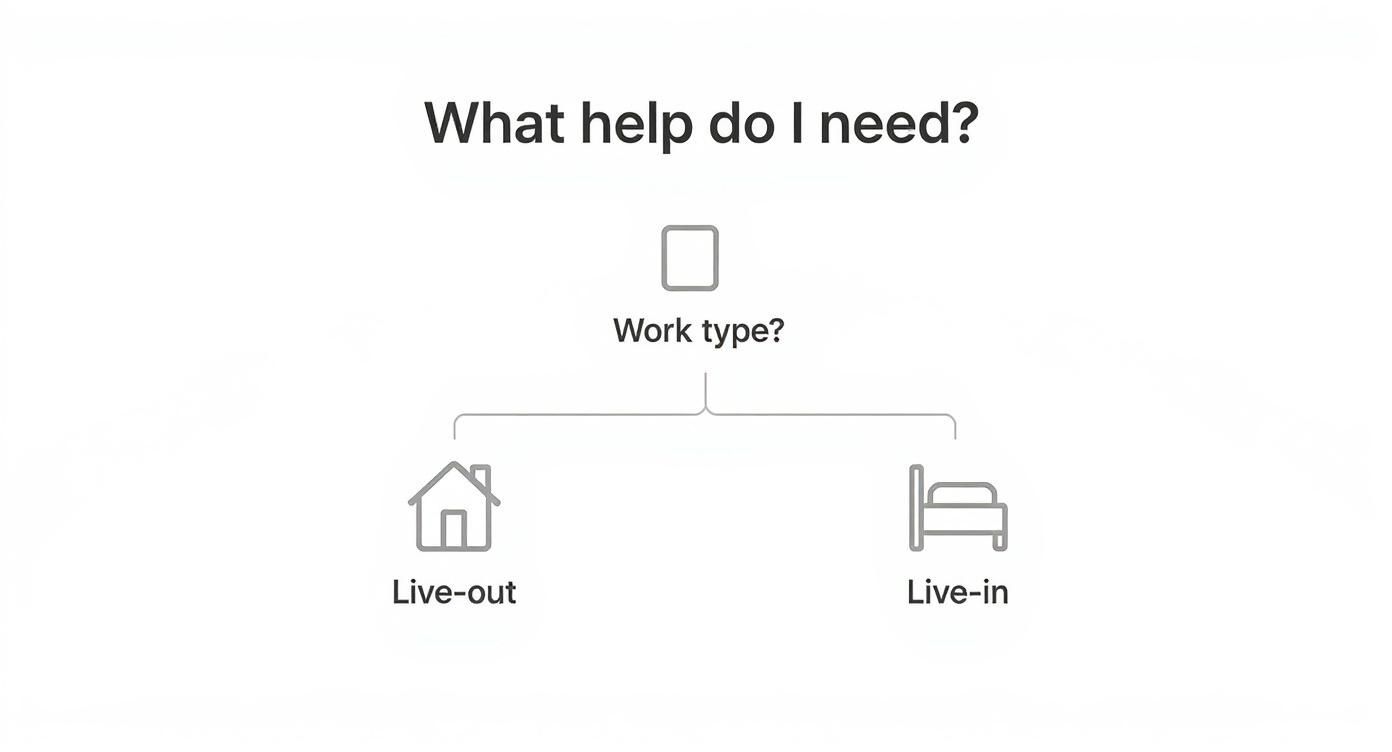
Clarifying this upfront will help you focus your efforts, whether you ultimately decide to use an agency or manage the search yourself.
How to Vet Candidates and Check References
A polished CV and a promising first chat are good signs, but they really only scratch the surface. Finding someone truly exceptional for your home means digging deeper. This is the point where you move beyond their skills on paper and get a genuine feel for their character, reliability, and most importantly, their discretion.
Over the years, I’ve seen time and again that the interview and reference checks are the most critical parts of the entire hiring process. This is your chance to build a complete picture of the person you’re considering bringing into your personal space. It isn’t an interrogation; it’s a structured, human conversation that gives you the insight needed to make a final decision with complete confidence.
Nailing this stage means paying attention to the subtle cues, listening to what isn’t being said, and asking the kind of questions that reveal far more than just technical ability.
Conducting an Effective Interview
The interview is where you meet the person behind the CV. Your aim is to assess not just their cleaning prowess, but their personality, their work ethic, and how they think on their feet in real-world situations. I always recommend a two-stage approach: a brief preliminary phone call, followed by a much more thorough in-person meeting.
Think of the initial phone call as a quick screening exercise. It helps you gauge their communication style and confirm the essential details from their application. If they make a good impression, the face-to-face interview is where you can truly discover if they are the right fit for your household’s unique rhythm and standards.
When you’re putting your questions together, it helps to group them into key areas. This structure ensures you cover all the important ground without missing anything. For those hiring for roles that also involve children, our guide on interview questions for nannies has an excellent framework you can easily adapt for any domestic staff position.
Here are the core areas I always make sure to cover:
- Experience and Skills: Don’t just re-read their CV. Ask them to walk you through a typical day in their last position. What did they prioritise?
- Situational Judgement: Give them a few hypothetical scenarios. This is the best way to see how they would react under a bit of pressure.
- Attitude and Reliability: Dig into their thoughts on punctuality, communication, and what taking initiative means to them.
- Discretion and Professionalism: Ask how they’ve handled confidential information or navigated difficult situations in past roles.
Key Interview Questions and Red Flags
The questions you ask are crucial, but what you listen for in the answers is even more telling. It’s all about reading between the lines and spotting any potential inconsistencies or red flags that might pop up.
Example Scenario-Based Questions
- “Imagine you accidentally broke a small, sentimental item while cleaning. What would be your immediate next step?”
- Listen for: Honesty and a sense of accountability. A great answer involves owning the mistake immediately and focusing on how to make it right, not on how to hide it.
- “If you noticed we were running low on a particular cleaning product you rely on, what would you do?”
- Listen for: Proactivity and foresight. The ideal candidate wouldn’t just wait until it’s gone; they’d add it to a list or let you know well in advance.
A candidate who speaks negatively or shares overly personal, gossipy details about previous employers is a major red flag. Professionalism and discretion are simply non-negotiable qualities for someone working within the privacy of your home.
The Art of Thorough Reference Checks
Reference checks are your final, vital layer of verification. Never, ever skip this step. A genuinely glowing reference can solidify your decision, while a hesitant or lukewarm one can save you from a very costly mistake down the line.
I can’t stress this enough: always speak to at least two previous employers directly over the phone. An email reference is far too easy to sanitise. A real conversation allows you to pick up on tone of voice, slight hesitations, and other nuances that text just can’t convey.
Crucial Questions to Ask Previous Employers
- “Could you please confirm the dates of employment and the candidate’s main responsibilities?” (This just verifies the basic accuracy of their CV).
- “How would you describe their reliability and punctuality?”
- “Can you give me an example of a time they showed real initiative or went above and beyond what was expected?”
- “Were there any areas where they needed a bit of extra guidance or support?” (This is a tactful way to probe for weaknesses).
- And the most important question of all: “Would you rehire them?” The answer—and any pause that comes before it—speaks volumes.
This rigorous vetting process might seem time-consuming, but it is the single best investment you can make to ensure a successful, long-term working relationship. It gives you the peace of mind that comes from knowing you’ve found a truly trustworthy and capable professional for your home.
Understanding Your Legal Duties as an Employer

The moment you welcome the right person into your household, the dynamic shifts. You’re no longer just a homeowner; you are now officially an employer. This is a significant transition, and it comes with important legal duties here in the UK.
I know this part can seem a bit daunting, but it really doesn’t have to be. In my experience, getting the legal framework right from the very beginning is one of the best ways to build a professional, respectful, and lasting relationship. It provides absolute clarity for both you and your new employee, turning what could be a source of stress into a solid foundation of trust.
Think of it as setting clear, fair rules of the game from the outset. Let’s break down exactly what you need to have in place to ensure you’re fully compliant and, frankly, a fantastic employer from day one.
Crafting a Legally Sound Employment Contract
A formal employment contract isn’t just a good idea—it’s a legal requirement and, practically speaking, an absolute must. This document becomes your shared source of truth, meticulously outlining every aspect of the role to prevent any misunderstandings down the line.
It must be clear, fair, and cover all the crucial bases. I always advise families to be as detailed as possible here; leave nothing open to interpretation.
At a minimum, your contract must clearly state:
- Job Duties: A comprehensive list of responsibilities that mirrors the job description you so carefully created.
- Working Hours: Specific days and times, including any arrangements for flexibility or overtime.
- Remuneration: The agreed salary or hourly rate, pay frequency (e.g., weekly, monthly), and how overtime will be handled and paid.
- Holiday Entitlement: The legal minimum is 5.6 weeks of paid holiday per year, which can include bank holidays.
- Sick Pay: Details on Statutory Sick Pay (SSP) and any enhanced contractual sick pay you decide to offer.
- Notice Period: The amount of notice required from either side to end the employment.
Getting the contract right is simply non-negotiable. It’s the document that protects everyone and establishes a professional tone from the very start. Never be tempted to rely on a verbal agreement; a written contract is your greatest asset in building a clear working relationship.
Navigating Tax and Pension Obligations
Once you’re an employer, you are responsible for managing tax and pension contributions. This is often where people feel out of their depth, but the process is more straightforward than it might appear. You’ll need to register as an employer with HMRC and operate a PAYE (Pay As You Earn) payroll scheme.
This just means you will deduct Income Tax and National Insurance from your employee’s salary and pay it directly to HMRC, along with your own employer’s National Insurance contributions.
You also have a legal duty to automatically enrol eligible staff into a workplace pension. This auto-enrolment requirement applies to employees aged between 22 and the State Pension age who earn over £10,000 a year. You must make contributions to their pension pot, and they will too.
The domestic help market in the UK is growing fast, which means more and more households are navigating these responsibilities. The UK cleaning services market alone generated USD 15.38 billion in 2022 and is projected to hit USD 30.06 billion by 2030, showing just how many people are in the same boat as you.
Simplifying Your Employer Responsibilities
Let’s be honest, managing payroll and legal admin can feel like a full-time job in itself, especially if it’s new to you. For many families, this is the single biggest hesitation when considering a private hire.
If handling these tasks directly feels too complex, there are some excellent services that can manage everything for you. To get a better sense of how this works, take a look at this complete guide to Employer of Record services. These firms can handle everything—payroll, tax, pensions, and contracts—ensuring you remain fully compliant without the administrative headache. This frees you up to focus on what really matters: enjoying the benefits of having a wonderful professional supporting your home.
Your Questions Answered: Navigating the Finer Points of Hiring
Even after going through all the steps, a few specific questions always seem to come up. That’s perfectly natural. Bringing someone new into your home is a major decision, and it pays to be thorough. I’ve compiled the most common queries I get from families, along with clear, practical answers to give you that extra bit of confidence.
Think of this as your quick reference for those nagging “what if” scenarios. My aim here is to give you straightforward advice, so you feel fully prepared to move forward.
What’s the Real Cost of Hiring a Maid in the UK?
This is usually the first thing people ask, and the honest answer is: it really depends. The final figure is a mix of location, the candidate’s experience, and whether you hire directly or use a specialist agency.
In big cities like London, you’ll want to budget for an hourly rate of £15 to £20, sometimes more. Once you get outside the capital, the rates tend to be a bit more moderate, often landing somewhere in the £12 to £16 per hour range.
But the hourly wage is just the starting point. You absolutely must factor in these other costs:
- Agency Fees: If you go through an agency, they’ll either charge a one-off placement fee (typically a percentage of the annual salary) or their margin will be built into a higher hourly rate they charge you.
- Live-In Salaries: For a live-in role, you’re looking at an annual salary, not an hourly wage. This can be anywhere from £25,000 to over £40,000, depending on the scope of duties and the candidate’s background. On top of that, you’re providing full board and lodging.
- Employer Costs: This is the non-negotiable part. You are the employer, which means you are legally responsible for paying National Insurance contributions and handling pension auto-enrolment. These are on top of the gross salary you agree upon.
How Should I Structure a Trial Period?
I can’t stress this enough: a trial, or probationary, period is essential for every single hire. It’s a vital, low-stakes window for both you and your new maid to see if the fit is right for the long haul.
This period usually lasts between one and three months and needs to be clearly written into the employment contract—it isn’t just an informal handshake agreement. From day one, this person is your employee, and you must pay them for every single hour they work.
The key to a successful trial is communication. Give regular, constructive feedback. A friendly chat after the first week to discuss what’s working well and gently point out any areas needing a tweak can make all the difference. The contract should also specify a much shorter notice period during this phase—often just one week—which gives both of you a simple exit strategy if things aren’t working out.
What Insurance Do I Need When I Employ Someone at Home?
This is a critical legal requirement in the UK that’s surprisingly easy to overlook, but you absolutely cannot ignore it. When you hire someone to work in your home, you are legally obligated to have Employers’ Liability Insurance.
This insurance is there to protect you. It provides cover for at least £5 million if your employee is injured or becomes ill as a direct result of working for you. Without it, you could face hefty fines and be held personally liable for compensation.
The good news? Many standard home insurance policies include this cover. But you can’t just assume it’s there. You must call your insurer, tell them you’re employing someone, and get their confirmation that you have the necessary cover in place.
It’s also a smart move to check your contents insurance. See if it includes cover for accidental damage caused by domestic staff. It’s an extra layer of protection that brings total peace of mind.
How Do I Manage Privacy and Security in My Home?
Trust is the absolute bedrock of the relationship with your household staff. That trust is built by setting clear, professional boundaries right from the start.
When your new maid begins, walk them through the house and clearly point out any areas that are considered strictly private. For high-profile families or homes where confidential business is conducted, a non-disclosure agreement (NDA) is a standard and sensible precaution. It formalises the expectation of discretion.
If you have security cameras, you must be transparent about them. It’s fine to have them in common areas like hallways and kitchens, but you have to let your staff know they are there. And just to be clear, it is illegal to put any recording devices in private areas like bathrooms or a live-in maid’s own bedroom.
Ultimately, your best tool for ensuring privacy and security is the one we’ve already focused on: a rigorous vetting and reference-checking process. It remains your first and most effective line of defence in hiring a discreet and trustworthy professional.
Finding the perfect addition to your household staff requires expertise and a deep understanding of your unique needs. At Superstar Nannies, we specialise in sourcing and placing elite, thoroughly vetted professionals for discerning families worldwide. Whether you need a meticulous housekeeper, a bilingual nanny, or a complete estate management team, we provide a discreet and dedicated service to bring harmony and peace of mind to your home. Discover how our bespoke staffing solutions can support your household.