


From my years of experience, I can tell you that hiring a private chef in the UK is one of the most significant lifestyle investments a family can make. Full-time annual salaries typically range from £60,000 to £130,000. If you’re looking for a one-off dinner party to celebrate something special, you can expect costs to fall between £65 and £150 per person.
But believe me, this isn’t just about paying for meals. It’s about a decision to reclaim your precious time, to elevate your family’s health, and to bring an entirely bespoke culinary experience right into your home. It’s a journey I’ve guided many families through, and it’s always transformative.
Your Personal Guide to Private Chef Costs

Thinking about hiring a private chef is the first step towards a major lifestyle upgrade, and it’s a conversation I love having with clients. It goes far beyond the food on the plate; it’s an investment in unparalleled convenience, your family’s well-being, and the priceless hours you’ll save on meal planning, grocery shopping, and cooking. Before you can enjoy those benefits, though, you need a clear, honest picture of the costs involved.
I’ve seen firsthand how the financial side of things can vary enormously. Are you looking for a chef to create a single, unforgettable evening, or do you need a full-time professional to become an integral part of your household? The scope of their duties, their level of experience, and even your postcode will all play a part in shaping the final salary.
Typical Private Chef Costs in the UK at a Glance
To give you a clear, straightforward starting point, let’s break down what you can expect to pay for a private chef in the UK. The market covers a wide spectrum of services and price points. Research often shows the average cost for a private event is around £86 per person, while full-time roles command a substantial annual salary.
Think of these figures as a framework for our conversation. The true value, however, comes from understanding what lies behind the numbers. A private chef is far more than an expense; they are a key professional who can fundamentally improve your family’s daily rhythm and nutritional intake. For a deeper dive into their role, our guide on what a private chef is is an excellent resource.
A private chef offers a return on investment measured in moments—more time with family, less stress around meals, and the quiet luxury of having your culinary needs perfectly and personally met, day after day.
I’ve designed this guide to feel like a conversation with a trusted advisor. We’ll walk you through every financial aspect, from salary to hidden costs, so you feel confident and fully informed. To start, here is a simplified table summarising typical costs before we explore each area in more detail.
| Service Type | Average Cost Range |
|---|---|
| One-Off Dinner Party (per person) | £65 – £150+ |
| Weekly Meal Preparation Service | £250 – £500 (plus groceries) |
| Part-Time Chef (annual salary) | £35,000 – £55,000 |
| Full-Time Live-Out Chef (annual salary) | £60,000 – £90,000 |
| Full-Time Live-In Chef (annual salary) | £70,000 – £130,000+ |
This table provides a high-level overview, but as I always tell my clients, with any bespoke service, the final cost will depend entirely on your unique requirements and the calibre of the chef you choose.
Breaking Down Private Chef Salaries
Figuring out what it costs to hire a private chef isn’t about finding a single price tag. It’s more about understanding the different ways a chef can fit into your life, because how you employ them directly shapes the salary. I often compare it to choosing a car; some people need a reliable daily runaround, while others are looking for a high-performance machine for special occasions.
Each of these arrangements comes with its own financial and lifestyle considerations. You can think of it as a spectrum. On one end, you have the expert brought in for a single, show-stopping event. On the other, you have a culinary professional who becomes a trusted, long-term member of your household team.
The Full-Time Culinary Director
Hiring a full-time, live-in chef is the most comprehensive choice, and it’s a role I’ve filled for many busy families. This person is essentially your personal culinary director, overseeing every detail of your family’s food and nutrition. They handle everything from daily meals and menu planning to sourcing ingredients and managing the kitchen. Over time, they get to know your tastes inside and out, anticipate your needs, and often travel with you to provide seamless culinary consistency wherever you go.
Naturally, this is the most significant financial commitment, but the lifestyle benefits are enormous. It’s an investment that gives you back countless hours and guarantees your family enjoys nutritious, restaurant-quality meals day in, day out. A full-time chef doesn’t just cook; they curate your entire dining experience.
Choosing a chef is a deeply personal decision. It’s about finding a professional whose culinary philosophy and personality harmonise with your family’s rhythm, turning every meal into an experience of comfort and delight.
The Part-Time Specialist for Daily Life
For many families, a part-time chef strikes the perfect balance. This is a brilliant solution if you need support during your busiest periods, like getting through hectic weeknight dinners or having healthy lunches prepped for the week. A part-time chef might work a few days a week or for a set number of hours each day, focusing purely on getting delicious meals on the table.
This option offers huge relief from the daily grind without the full-time commitment. The cost is lower, but the impact on your quality of life is just as significant. It lets you enjoy bespoke meals exactly when you need them most, freeing you up to focus on work, family, or anything else on your plate.
In the UK, the pricing for these models varies quite a bit. A part-time or event chef might charge an hourly rate of £30 to £80. For a full-time chef handling daily cooking and shopping, you’d be looking at an annual salary somewhere between £35,000 and £70,000. If you’re just after weekly meal prep, a service that covers five to seven meals could run between £250 and £500, with groceries included. You can get a more detailed picture by learning about the various costs of hiring a private chef.
The Event Chef for Memorable Occasions
Finally, you have the event chef—a specialist you call on for one-off occasions. This is your go-to for an unforgettable dinner party, a milestone birthday, or an elegant Christmas lunch. I’ve had the pleasure of arranging these for clients, and it’s always a joy to see the result. They’ll collaborate with you on a unique menu, source incredible ingredients, and deliver a flawless dining experience for you and your guests.
Hiring an event chef is a one-time expense, usually charged per head, and it’s the ultimate way to elevate a special occasion. Best of all, it allows you to relax and be a guest at your own party. It’s a fantastic way to get a taste of the private chef experience without any long-term strings attached, making true luxury accessible for those moments that really matter.
How Location Shapes Chef Salaries
Ever wondered why a private chef’s salary in Knightsbridge looks so different from one in the Cotswolds? It’s a question I get all the time. Much like property prices, the cost of a private chef is heavily tied to geography. A chef’s salary isn’t just an arbitrary number; it’s a direct reflection of the local economy, the demand for elite culinary talent, and the cost of simply living in that specific area.
This isn’t just about paying more in a big city. It’s about the entire ecosystem surrounding high-end service. Major hubs like London, New York, or Dubai are magnets for top talent, but they also come with a much higher price tag for everything from rent to a simple cup of coffee. A chef has to factor these personal costs into their salary expectations just to maintain their standard of living.
This infographic gives a simple, at-a-glance breakdown of the most common ways private chefs are paid.
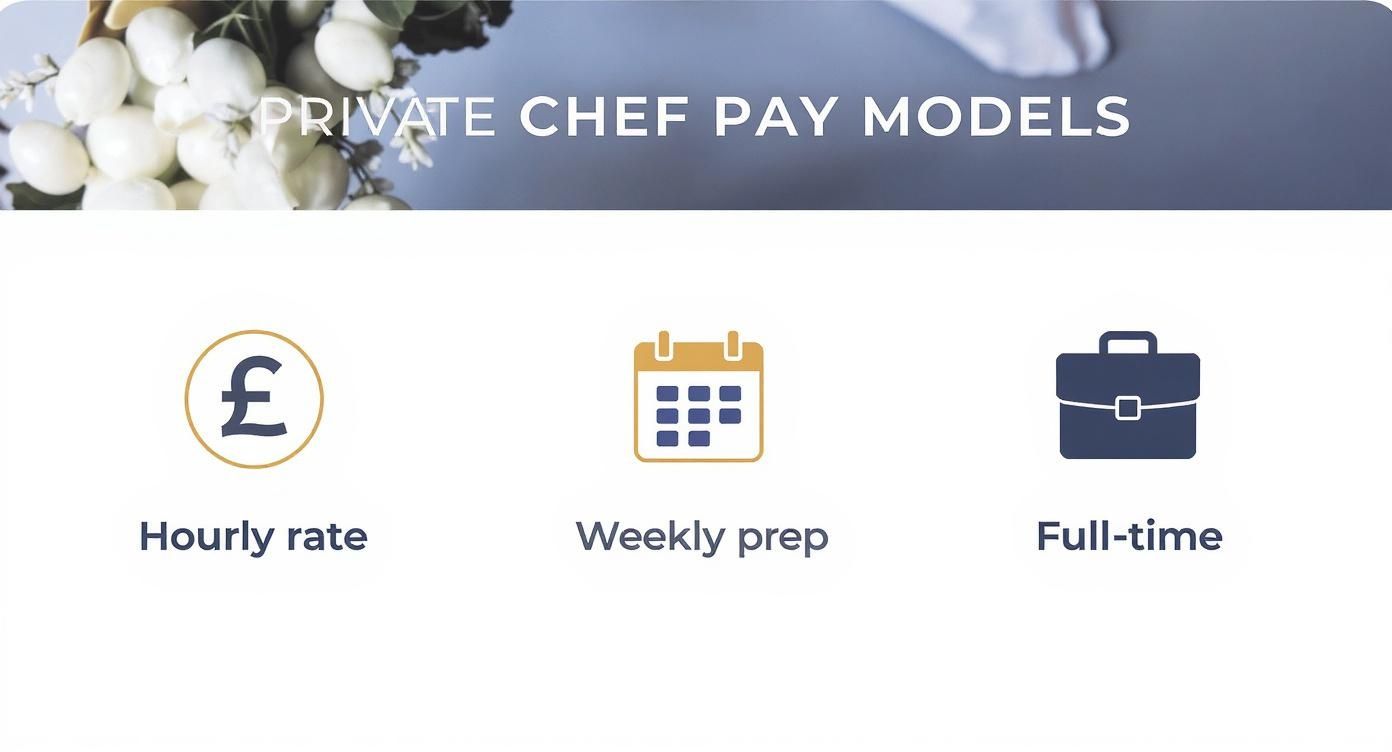
As you can see, the payment structure can be anything from a flexible hourly rate for a single event to a comprehensive annual salary for a full-time commitment. Each model is designed to suit different family needs and lifestyles.
A Tale of Two Kitchens: London vs. The Countryside
To really get a feel for this, let’s imagine two scenarios I’ve encountered many times. First, picture a family living in a bustling part of central London. They need a chef who is not only a master in the kitchen but is also completely at ease with the relentless pace of city life—someone who can source rare ingredients from specialist markets at a moment’s notice and navigate the capital’s unique logistics without breaking a sweat.
The talent pool in London is huge, but so is the competition for the very best. The most experienced chefs are in constant demand, and the cost of living is sky-high. As a result, a top-tier chef in London will likely command a salary of £80,000 to £130,000, and often more. That figure accounts for both their world-class expertise and the significant expense of living and working in the capital.
Now, let’s head out to a sprawling estate in the Cotswolds. I once placed a chef with a wonderful family there, and the brief was entirely different. The lifestyle is quieter, certainly, but with an equally high demand for quality. The chef needed here has a different set of skills: an intimate knowledge of local farms, the ability to plan menus around the seasons, and maybe even the experience to manage a kitchen garden.
While the cost of living is lower than in London, the pool of highly experienced chefs willing to relocate or commute to a more rural setting is much smaller. This scarcity can push salaries up, even if the starting point is a little lower. A comparable chef in the Cotswolds might expect a salary in the range of £65,000 to £95,000. The premium here is for exclusivity and the unique talent for delivering five-star service far from a major metropolitan hub.
The postcode on your letterhead doesn’t just determine your address; it sets the stage for the entire financial conversation. It shapes the talent pool, defines the cost of living, and ultimately influences the salary required to attract the very best culinary professionals to your home.
The International Perspective
This principle holds true far beyond the UK’s borders. International hotspots for wealth create their own distinct markets for private household staff, each with its own salary benchmarks. I often coordinate with partners globally, so I see these differences up close.
Here’s a look at how annual salaries for full-time, experienced private chefs can vary across some of the world’s most demanding locations.
Estimated Annual Private Chef Salaries by Region
| Region | Typical Annual Salary Range (GBP Equivalent) |
|---|---|
| London, UK | £80,000 – £130,000+ |
| New York City, USA | £95,000 – £160,000+ ($120,000 – $200,000+) |
| Monaco | £85,000 – £150,000+ (€100,000 – €175,000+) |
| Dubai, UAE | £90,000 – £140,000+ (Tax-free, often includes housing) |
| Geneva, Switzerland | £80,000 – £135,000+ (CHF 90,000 – CHF 150,000+) |
As the table shows, there are significant differences driven by local economics and demand. Let’s break down a few of these key international markets:
- Monaco: Here, the perfect storm of extreme wealth, limited space, and high demand for discretion and multilingual skills pushes salaries to a premium. A top private chef could easily command €100,000+.
- Dubai: As a major hub for expatriates and UHNW individuals, Dubai has an incredibly competitive market. Chefs often need experience with Middle Eastern cuisine and managing large-scale entertainment. Salaries are frequently tax-free, but the expected level of service is exceptionally high, with packages often starting from £90,000 (GBP equivalent).
- New York City: Much like London, the dizzying cost of living and fierce competition for top talent mean that experienced private chefs in Manhattan can expect salaries well over $120,000.
Understanding these regional nuances is absolutely critical when setting a realistic budget. Your location is one of the biggest pieces of the puzzle, directly impacting the salary you’ll need to offer to attract and retain the culinary professional your family deserves.
Understanding the Costs Beyond Salary
When you start thinking about hiring a private chef, it’s easy to focus on the salary. But in my experience, that figure is really just the starting point. To build a solid, long-term working relationship, you have to look at the complete financial picture.
This isn’t about uncovering ‘hidden fees’. It’s about professional, responsible planning. I always advise clients to see these additional costs as an investment in a key member of their household staff. It creates a respectful environment right from the beginning and ensures there are no surprises down the road.
Your Responsibilities as an Employer
Hiring a private chef, whether full-time or part-time, makes you an employer. In the UK, this comes with specific legal and financial duties that are a crucial part of managing the cost of a private chef.
These aren’t optional extras; they’re legal requirements that protect both you and your employee. The main contributions you’ll need to make include:
- National Insurance Contributions: You’ll be responsible for paying Class 1 National Insurance on your chef’s earnings once they go over a certain threshold.
- Pension Contributions: UK law requires you to automatically enrol eligible staff into a workplace pension scheme and make contributions on their behalf.
- Holiday and Sick Pay: Your chef is legally entitled to paid holidays (a minimum of 5.6 weeks per year) and Statutory Sick Pay if they’re too ill to work.
Acknowledging these employer duties is fundamental. It formalises the relationship, provides your chef with essential security, and protects you by ensuring full legal compliance. This professionalism is the bedrock of a successful household team.
Practical and Lifestyle Expenses
Beyond the legal requirements, there are practical expenses that are part of the overall compensation package. These can be especially important for live-in or travelling chefs and are often just as crucial as the salary when it comes to attracting and keeping the best people.
For example, if your chef travels with you to a holiday home in Europe or joins you on a yacht, you’ll naturally cover their travel, accommodation, and a daily allowance (or per diem) for meals and small expenses. For a deeper look into what a bespoke culinary service can entail, you can explore the details of private chef services at home.
Common Additional Costs to Consider
Thinking through these practical costs from the outset helps your chef do their job without any logistical headaches. Depending on your specific setup, you should be prepared to budget for:
- Accommodation: For a live-in chef, providing private and comfortable living quarters is standard. This might be a dedicated room, a separate flat, or a cottage on the estate.
- Vehicle Access: If your chef needs to visit farmers’ markets or specialist suppliers, providing a household vehicle or covering their mileage expenses is a common and necessary provision.
- Health Insurance: Offering private health insurance is a powerful benefit that can make your position far more attractive, especially when you’re competing for truly elite culinary talent.
Getting a handle on these elements ensures a smooth and transparent hiring process. For a wider view of the operational costs that culinary professionals often manage, a guide on catering business financial planning can offer some useful context.
What Makes a Premium Chef Worth the Investment?

So, what separates a talented home cook from a culinary professional commanding a six-figure salary? It’s a question that gets to the heart of what we do. It comes down to a unique blend of highly specialised skills, hard-won experience, and specific personal attributes that go way beyond just making tasty food. These are the factors that elevate a chef into the elite tier, justifying a higher investment for a truly exceptional service.
I often compare it to the difference between a good family doctor and a world-renowned heart surgeon. Both are qualified medical professionals, but one has a rare specialism, honed over years of intense focus and practice. In the same way, a top-tier private chef brings a specific mix of artistry, nutritional science, and an intuitive understanding of a private household’s rhythm.
This isn’t just about mastering fancy cooking techniques. It’s about a deep, practical knowledge of flavour, complex nutrition, and the subtle dynamics of working within a private home. These chefs are part-problem-solver, part-logistician, and part-discreet confidante, all rolled into one.
The Power of Specialised Knowledge
One of the biggest drivers of cost is genuine expertise in complex dietary requirements. This is where a chef transforms from a cook into a wellness partner for the family. I once placed a chef with a family where three members had different, complex dietary needs. The chef’s ability to create delicious, inventive menus that satisfied everyone without anyone feeling like they were missing out was, for them, priceless. Here, their knowledge of food science is every bit as important as their knife skills.
Imagine trying to feed a family with multiple, conflicting allergies. A premium chef doesn’t just avoid the problem ingredients; they create harmonious, exciting meals where no one feels left out. This skill is built on rigorous training and a real passion for food’s potential to heal and nourish.
A truly elite private chef understands that their role extends beyond the kitchen. They are custodians of a family’s well-being, curators of memorable experiences, and silent guardians of the household’s privacy and harmony.
The Michelin-Level Skillset
Experience in Michelin-starred restaurants is another key factor that increases the cost of a private chef. This kind of background guarantees you’re hiring a professional who operates with flawless precision, creativity, and an unwavering commitment to quality, even under intense pressure. They bring a level of organisation and artistry that is simply on another level.
This intense training prepares them for all sorts of unique challenges. I remember a chef I placed who had to provision a superyacht for a month-long trip through remote waters. It required meticulous planning, an understanding of international supply chains, and the ability to create five-star meals with whatever was available. It’s a logistical masterpiece, and while it’s a world away from managing a family’s wellness plan at home, both demand an extraordinary degree of skill.
The Non-Negotiable Art of Discretion
For UHNW and high-profile families I work with, discretion isn’t just a nice-to-have; it’s a fundamental requirement. A premium chef must be completely trustworthy, understanding the importance of confidentiality in every single thing they do. This isn’t something you learn at culinary school—it’s earned through years of experience in similar high-stakes environments.
Their ability to work seamlessly and almost invisibly within the household, respecting personal boundaries and maintaining absolute privacy, is a skill that commands a significant premium. That level of professionalism provides a peace of mind that is truly priceless.
The demand for this kind of bespoke service is definitely on the rise. The UK’s personal chef services market hit an estimated £500 million in 2024 and is projected to climb to over £700 million by 2030. This growth, detailed in this in-depth market analysis, shows a clear trend towards investing in high-calibre culinary talent. Ultimately, these elite skills add clear value, turning the chef’s salary into a worthwhile investment in your family’s lifestyle and well-being.
Finding the Perfect Chef for Your Family
Hiring a private chef is about so much more than just food. The real magic happens when you find a professional who not only creates incredible meals but also fits seamlessly into the unique rhythm of your home. It’s not a transaction; it’s the start of a trusting, long-term relationship.
This is where my work becomes an art form. My recruitment process is guided by years of experience, and it’s one that looks far beyond a polished CV or an impressive tasting menu. My aim is to find someone whose personality, temperament, and professional style are a natural match for your family.
This careful, bespoke approach is where a specialist agency delivers its true value. We’re not just filling a vacancy; we’re helping you build a successful partnership that elevates your daily life for years to come.
The Art of the Perfect Match
Think of it like casting a lead role in the story of your home. Of course, you need someone with impeccable technical skills, but you also need a person who understands the subtle, unspoken needs of your household. Do they thrive in a formal environment, or are they better suited to a more relaxed, family-centric atmosphere? Do they possess the quiet discretion essential for a high-profile home?
These are the nuanced questions a simple job advert can never answer. I’ve learned that a successful match is made by understanding these personal dynamics intimately. It demands deep insight into both the family’s lifestyle and the chef’s character to ensure a smooth and happy integration.
The right chef placement is a delicate balance of culinary artistry and personal chemistry. It’s about finding the individual who doesn’t just cook for your family, but who truly connects with them, enriching your home with both exceptional food and a positive, professional presence.
Our rigorous vetting process is designed to uncover precisely this. We go far beyond just checking references and qualifications. I personally invest real time in getting to know each candidate—understanding their career goals, their working style, and what truly motivates them. This allows us to make those intuitive connections that lead to successful, lasting placements.
Saving Time and Mitigating Risk
Trying to navigate the hiring process alone can be a monumental drain on your time and energy. I’ve seen clients come to us after months of frustration. Sifting through endless applications, conducting interviews, and verifying credentials is a full-time job in itself. Even more, a bad hire can be incredibly disruptive and costly, both financially and emotionally.
When you work with a specialist agency, you’re shielded from these risks. We present only a small, curated selection of perfectly suited candidates, saving you countless hours and giving you the peace of mind that every professional has been meticulously screened.
Our ongoing support also ensures the relationship continues to thrive long after the contract is signed. For those ready to begin this journey, our detailed guide on hiring a private chef offers more insights into making the best choice for your household. This dedicated approach transforms the significant cost of a private chef into a deeply worthwhile investment in your family’s happiness and well-being.
Your Questions About Hiring a Chef Answered
Now that we’ve unpacked the various costs involved in hiring a private chef, you probably have a few practical questions bubbling up. This is perfectly normal. Let’s walk through some of the most common queries I hear from families, so you can move forward with total clarity and confidence.
How Does Payment Typically Work?
Getting the payment structure right from the start is crucial for a smooth working relationship. While every arrangement can be customised, there are some well-established norms for handling the cost of a private chef.
- For One-Off Events: Expect to pay a deposit to secure the date, which is typically 50% of the total fee. The final balance is then usually settled on or just before the day of the event itself.
- For Full-Time Placements: Once a chef accepts your offer and is on board, their salary is paid on a regular schedule through your household payroll, just like any other member of your staff. Monthly payments are the most common arrangement.
- Agency Fees: The placement fee for our services is invoiced after you’ve formally hired your chosen chef and a start date has been set.
Who Is Responsible for Buying Groceries?
This is a fantastic and very practical question. In nearly every case, the chef takes the lead on all grocery shopping. This makes perfect sense, as it allows them to hand-select the exact ingredients and quality needed to bring their menus to life.
The cost of the food itself, however, is a separate budget item covered by you. Most families find it easiest to provide their chef with a dedicated household credit card or a weekly float to handle all food-related expenses. This keeps everything transparent and straightforward for both sides.
It’s a common misconception that the food budget is rolled into a chef’s salary. It’s better to think of it this way: you are paying for the chef’s skill, time, and creativity, while the groceries are simply the raw materials they need to perform their craft.
As you get closer to hiring, you might also start thinking about your kitchen. Many clients wonder what cookware professional chefs use and whether they need to upgrade. While a truly great chef can adapt to most environments, having the right tools certainly helps them perform at their peak. Your new chef will likely do a kitchen assessment and can advise on any key pieces of equipment that might be needed.
At Superstar Nannies, we know that finding the right private chef is about more than just food; it’s about finding the right personality for your home. Our speciality is making that perfect match between exceptional culinary talent and discerning families like yours.
Ready to find a chef who will bring a new level of culinary delight to your home? Find your perfect household staff with Superstar Nannies.